
Resources
IACP's resources are aimed at helping law enforcement executives do their jobs better and cover a variety of topics, including professional development, leadership, management, and supervision, as well as hot topics such as ethics.
Resources
A Common Lexicon
Duluth Speed and Alcohol In Brief
By emphasizing performance management, the Duluth Police Department has re-engaged officers, encouraged traffic enforcement and reduced traffic fatalities from speed and alcohol.
Washington State Speed and Alcohol In Brief
The Washington State Patrol (WSP) uses datadriven deployment to advance its goal of reducing traffic fatalities from speed and alcohol.
Building Trust Between the Police and the Citizens They Serve
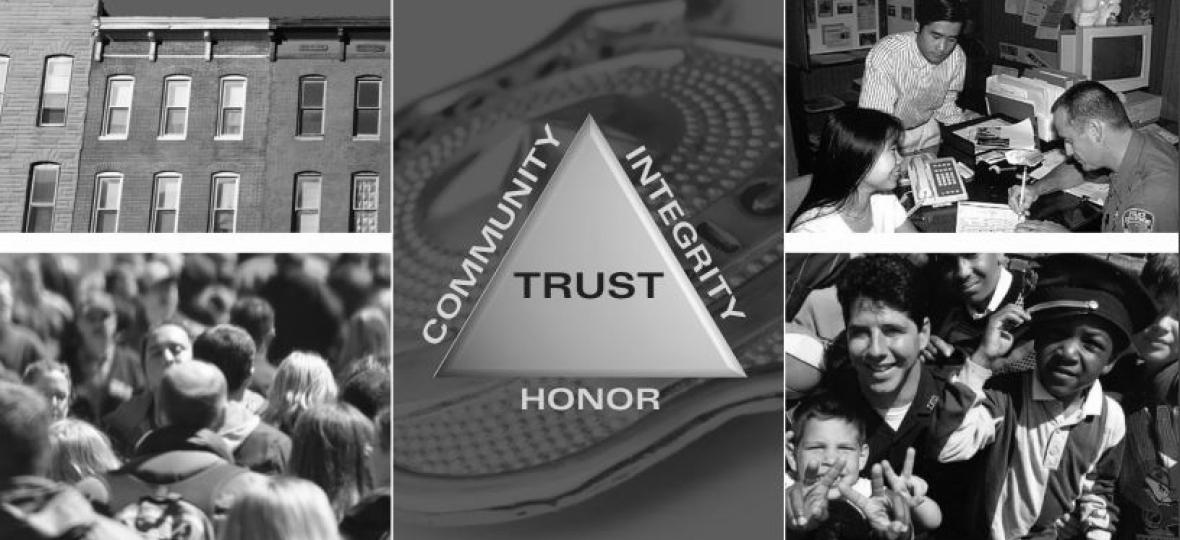
Building and maintaining community trust is the cornerstone of successful policing and law enforcement. The building and maintenance of trust takes a great deal of continuous effort. Unfortunately, the ethical work of thousands of local law enforcement officers is easily undone by the actions of one unethical officer. Often, the indictment of one seems like an indictment of all. Once misconduct occurs, the Internal Affairs function of the law enforcement agency becomes the primary method of reassuring the community that the police can and will aggressively address and resolve unethical behavior. In short, the integrity of the police will always dictate the level of community trust.
Throughout 2008 and 2009, the International Association of Chiefs of Police (IACP), supported by a grant from the Office of Community Oriented Policing Services (the COPS Office), examined the community trust continuum, with a focus on the pivotal role of Internal Affairs in rebuilding community trust once misconduct occurs. Working with ethics and Internal Affairs experts from across the country, IACP staff studied promising practices in recruitment and hiring, policies and training, rewards and discipline, and, in particular, successful and transparent Internal Affairs investigations.
This guide attempts to place Internal Affairs in its proper context—not as a standalone activity, but as one component of a systemic, agency-wide, professional standards effort. After discussion of some of the other components necessary in the community trust continuum—hiring, training, rewarding excellent performance—the guide focuses on building an effective Internal Affairs approach for any size or type of agency. The guidelines for the Internal Affairs function address every aspect, from complaint processing to decision-making, discipline, notification, and community transparency.
Looking at the Internal Affairs process from a citizen’s viewpoint, this guide presents information on how local law enforcement agencies can be accountable to their citizens by engaging them in any number of trust-building initiatives, including citizen input for Internal Affairs determinations and discipline. Citizen involvement models range from very informal mechanisms to formalized (sometimes mandated) citizen Internal Affairs review boards. Departments are urged to create connections with their citizens in a proactive fashion to prevent the development of tenuous relationships following high-profile misconduct.
Building Trust and Legitimacy

Building trust between police and the communities they serve is an essential component of positive and engaging community-police relationships. This section includes concepts like transparency, accountability, procedural justice, and police legitimacy. The importance of police culture is also a key component of this section.
Model Policies & Concept Papers
Reports & Publications
- Trust Initiative Report
- Building Trust Between Police and the Citizens They Serve: An Internal Affairs Promising Practices Guide for Local Law Enforcement
- IACP National Policy Summit on Community-Police Relations: Advancing a Culture of Cohesion and Community Trust
- Improving Officer Response to Persons with Mental Illness and Other Disabilities: A Guide for Law Enforcement Leaders
- Protecting Civil Rights: A Leadership Guide for State, Local, and Tribal Law Enforcement
- Building Communities of Trust: Guidance for Community Leaders
- Practices in Modern Policing: Community Participation and Leadership
Articles & Blog Posts
Other Resources
Community Policing & Crime Reduction
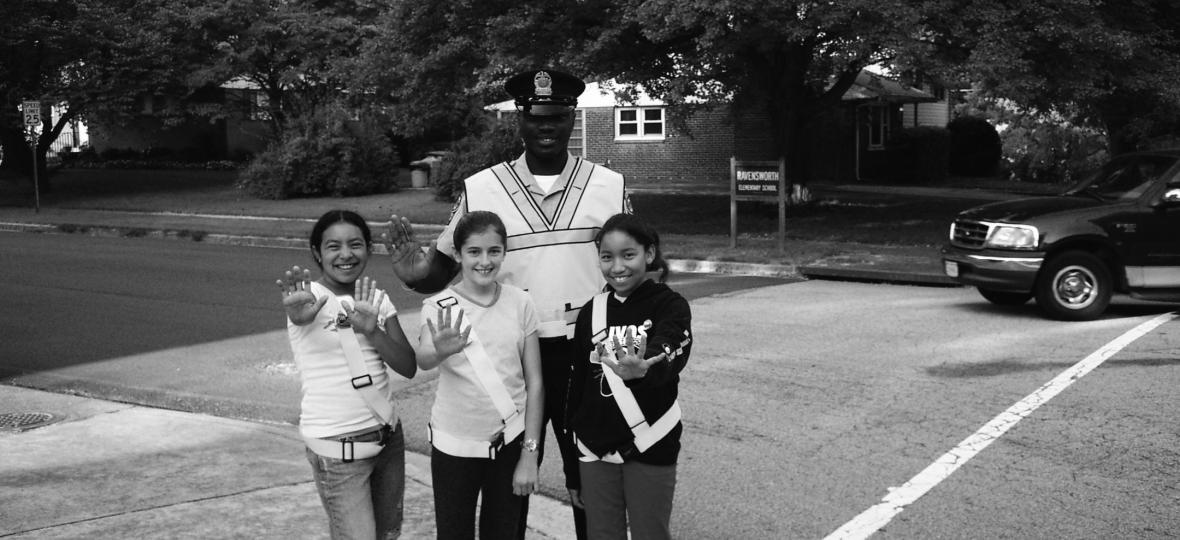
Community policing is evolving to meet the new expectations that emerge in the 21st century. This section examines the role law enforcement officers play in intervention and prevention and how that relates to crime reduction. Relationship and partnership building, as well as interactions with youth, are also themes in this section.
Tools
- Building Communities of Trust: A Guidance for Community Leaders
- The Effects of Adolescent Development on Policing
- Improving Law Enforcement Responses to Adolescent Girls
- Reducing Violence and Crime on our Streets: A Guide for Law Enforcement Leaders
- Youth Focused Policing Agency Self-Assessment Tool
Reports & Publications
- Practices in Modern Policing: Police-Youth Engagement
- IACP National Policy Summit on Community-Police Relations: Advancing a Culture of Cohesion and Community Trust
- IACP National Summit on Law Enforcement's Leadership Role in Juvenile Justice Reform
- Nationwide Survey of Law Enforcement Executives on Juvenile Justice
- Practices in Modern Policing: Policing in Small, Rural, and Tribal Communities
- Practices in Modern Policing: Policing in Vulnerable Populations
Articles & Blog Posts
Other Resources
- Training Key: Community Policing and Crime Reduction
- IACP Police & Youth Engagement Project
- IACP Youth Focused Policing Resource Center
- Safeguarding Children of Arrested Parents Project
- Webinar: Effective Youth Diversion Strategies for Law Enforcement
- Video: Practices in Modern Policing: Policing in Small, Rural, and Tribal Communities
- Video: Practices in Modern Policing: Serving Vulnerable Populations
Policy & Oversight

Overview
This section outlines particular policy areas that should be addressed by agencies. However, having these policies is not enough; policies must reflect community values in order to enhance trust and legitimacy.
Tools
Reports & Publications
Articles & Blog Posts
- Citizen Advisory Boards in Contemporary Practice: A Practical Approach in Policing
- Inviting the Community into the Police Strategic Planning Process
Other Resources
- Law Enforcement Policy Center
- Training Key: Policy and Oversight
- Testimony of IACP - Policy and Oversight
Training and Education

This section focuses on hiring, training, and continuing education for law enforcement officers. Focusing the need for increased training with an emphasis on particular topics such as problem-solving and decision-making, crisis intervention, cultural responsiveness, and procedural justice.
Training Opportunities
Model Policies & Concept Papers
Articles & Blog Posts
National Summit Report
New Resource: Law Enforcement’s Leadership Role in Juvenile Justice Reform: Actionable
Recommendations for Practice & Policy
When a young person gets in trouble with the law, oftentimes arrest, court referral, and detention run counter to public safety by making it more likely that young person will reoffend. IACP’s National Summit on Law Enforcement Leadership in Juvenile Justice drew attention to the often untapped potential of law enforcement executives to improve their agencies’ response to young people and to serve as credible voices for “smart on crime” juvenile justice reforms in their communities and beyond.
The summit report, Law Enforcement’s Leadership Role in Juvenile Justice Reform: Actionable Recommendations for Practice & Policy, sets forth 33 recommendations for concrete actions that law enforcement leaders can take in collaboration with partners at the local, state, and national levels.
IACP convened the national summit with support from the John D. and Catherine T. MacArthur Foundation as part of a multiyear initiative to advance law enforcement leadership in juvenile justice. The summit brought together a multidisciplinary group of 90 participants that included law enforcement executives and officers at various levels, judges, prosecutors, public defenders, young people, parents, policymakers, researchers, mental health service providers, and a range of other juvenile justice stakeholders from across the country.
The 33 summit recommendations are divided into eight thematic areas:
- Making Juvenile Justice a Priority within Law Enforcement Agencies
- Building Partnerships Among Law Enforcement, Youth, and Their Families
- Collaboration and Information Sharing
- Promoting Alternatives to Arrest, Court Referral and Detention
- Data Collection and Expanding Evidence-Based and Promising Initiatives
- Pathways to School Completion
- Responding to Youth with Behavioral Health Conditions and Trauma Histories
- Amplifying Law Enforcement’s Advocacy on Juvenile Justice Reform
For more information please contact Sr. Program Manager Aviva Kurash at [email protected].
Law Enforcement’s Leadership Role in the Advancement of Promising Practices in Juvenile Justice

 In 2011, the IACP and the John D. and Catherine T. MacArthur Foundation began a multi-year partnership to increase the leadership role of state and local law enforcement executives to effectively address systemic juvenile justice issues as well as improve local responses to juvenile offenders through a project titled Law Enforcement’s Leadership Role in the Advancement of Promising Practices in Juvenile Justice.
Protecting Civil Rights: A Leadership Guide for State, Local, and Tribal Law Enforcement

The effectiveness of the police depends on the trust and confidence of the community. If civil rights of individuals or groups within a community are compromised, public trust and confidence in the police are diminished. Without trust, police become less legitimate in the eyes of the public. Compromised relations with the community result in strained relations and in less effective law enforcement.
With funding from and collaboration with the Office of Community Oriented Policing Services (COPS), IACP produced this guide as a comprehensive overview of the civil rights issues and challenges that face today’s law enforcement leaders.
The guide describes the processes by which agencies with alleged “pattern or practice” civil rights violations are investigated and monitored. It offers lessons learned, resources, and strategies for protecting and promoting civil rights across the varied communities’ police agencies serve.
Topics addressed include:
- Federal “Pattern or Practice” Civil Rights Investigations and Agreements
- The Pivotal Role of Community Policing
- The Benefits of Early Intervention Strategies
- Effective Management of Use of Force
- Fair and Open Investigation of Citizen Complaints
- Bias-free Policing
- Personnel and Data Management Issues Related to Civil Rights
Besides the COPS Office, IACP worked with other components of the US Department of Justice in developing this guide. More information about these agencies is provided below.
Related URLs:
Reducing Officer Injuries: Final Report

In order to begin to better understand the scope and frequency of injuries sustained by law enforcement officers, the International Association of Chiefs of Police (IACP), through a cooperative agreement with the Bureau of Justice Assistance, Office of Justice Programs, U.S. Department of Justice, conducted a multi-department assessment of line-of-duty injuries.
Eighteen different agencies participated in this study and tracked all reported injuries over the course of 1 year. All available information pertinent to each injury was documented and entered into a database using a standardized reporting instrument built for this study. The IACP collected all data and partnered with George Mason University to perform an analysis of the data and develop strategies and resources for injury prevention.
This report provides a more in-depth review of the data collected during this study and highlights other findings pertinent to injury trends and officer safety considerations. It is intended to serve as a resource for agencies and encourage them to think more critically about departmental injuries and proactive prevention strategies.


