
Resources
IACP's resources are aimed at helping law enforcement executives do their jobs better and cover a variety of topics, including professional development, leadership, management, and supervision, as well as hot topics such as ethics.
Resources
Law Enforcement Information on COVID-19

Coronavirus Disease 2019 (COVID-19) is a respiratory disease first identified in Wuhan, China, in December 2019. It has now been identified in more than 180 countries. This is an emerging and rapidly-evolving situation and new information becomes available daily.
This webpage is dedicated to aiding law enforcement in learning more about COVID-19 and how agencies can prepare. We will post new information as it becomes available.
Updated January 5, 2021
IACP COVID-19 Resources
General & Comprehensive Resources
- Mandating COVID-19 Vaccinations for U.S. Law Enforcement Personnel
- General COVID-19 Fact Sheet (Translation Available)
- IACP COVID-19 Considerations Document
- CRI-TAC Law Enforcement and COVID-19 Police Chief Supplement
- The Impact of COVID-19 on Law Enforcement Agencies (Wave 1)
- The Impact of COVID-19 on Law Enforcement Agencies (Wave 2)
Organizational Preparedness
- Organizational Readiness: Ensuring Your Agency is Prepared for COVID-19 (Translation Available)
- How to Request Support from the National Guard
- CRI-TAC Law Enforcement Officer Exposure to COVID-19 (Translation Available)
- CRI-TAC HIPAA Considerations for Law Enforcement during the COVID-19 Pandemic
Alternatives to Law Enforcement Procedure
- Law Enforcement’s Role in Enforcing Public Health Protections (Translation Available)
- Alternative Methods for Delivering Essential Law Enforcement Services (Translation Available)
- CRI-TAC Considerations for Law Enforcement Encountering COVID-19-Related Deaths
- Processing DUIs during the COVID-19 Pandemic: Considerations for Law Enforcement (Translation Available)
- IACP Virtual Listening Session on Policing in the Time of COVID-19
- Traffic Enforcement During the COVID-19 Pandemic (Translation Available)
Special Population Concerns
- IACP Virtual Roundtable on COVID-19 and Law Enforcement Response to Domestic and Sexual Violence
- IACP Virtual Listening Session on Victim Advocacy, Vicarious Trauma and the Impact of COVID-19
- Law Enforcement Response to Sexual Assaults during COVID-19 Pandemic (Translation Available)
- Supporting Victims of Domestic Violence during the COVID-19 Pandemic (Translation Available)
- Face Coverings and Police-Community Engagement
Officer Health, Safety & Wellness
- CRI-TAC Law Enforcement Officer Sickness with COVID-19 (Translation Available)
- Staying Healthy as a Police Officer during COVID-19 (Translation Available)
- Health and Safety for Law Enforcement Families (Translation Available)
- CRI-TAC Officer Wellness and Resiliency During the COVID-19 Pandemic (Translation Available)
- Law Enforcement and Family Wellness During COVID-19
- IACP Virtual Listening Session for Public Safety Personnel Focused on Vicarious Trauma and the Impact of COVID-19
CRI-TAC COVID-19 Library of Resources
 This is a compilation of resources to assist in informing your agency response to COVID-19. This library is designed for reference purposes only with resources shared by the field of law enforcement, for the field of law enforcement.
Coronavirus Funding
Coronavirus Emergency Supplemental Funding
- Informational Webinar
- Informational Presentation Slide Deck
- Solicitation
- Funding Allocations
- Information on State Administering Agencies
Additional Coronavirus Funding
- Guidance on Cares Act Grants
- First Responders Children's Foundation
- COVID-19 Funding Resources for Law Enforcement
Global Police Response to COVID-19
The emergence of COVID-19 is impacting communities across the globe. In these challenging times, police leaders can learn from one another by understanding how their colleagues from around the world are responding to this pandemic. To learn more about the global policing community’s response to COVID-19, please see below to access our global content.
Additional COVID-19 Resources
- CDC COVID-19: What Law Enforcement needs to know
- WHO Coronavirus
- EXTENDED: COPS Office Fiscal Year 2020 Solicitation Deadlines
- Memo from the United States Attorney General
- Novel Coronavirus (COVID-19) Call
- COVID-19 Exposure and Risk Mitigation Best Practices for Law Enforcement- Letter from the Office for State and Local Law Enforcement
- COVID-19 Exposure and Risk Mitigation Best Practices Resource Guide
- Public Safety Officers' Benefit Program
Non-COVID-19 Specific IACP Resources
- Pandemic Flu Planning & Response
- Mutual Aid
- Communicable Disease Prevention
- Law Enforcement and Public Health (2007)
- Considerations for Pandemic Flu Planning and Response (2007)
- The Pandemic Influenza Plan: Implications for Local Law Enforcement (2006)
- Protecting Officers Against Pathogens (2014)
- 2003 SARS Outbreak: The Response of the Toronto Police Service (2005)
CRI-TAC COVID-19 Field Features
CRI-TAC COVID-19 Field Features are a compilation of innovative practices implemented by the field to enhance operations while maintaining public safety and the safety and wellness of an agency during the COVID-19 pandemic.
Historical Pact Between Neighboring Agencies Offers Aid During Global Pandemic - Illinois
Submitted by: Chief Thomas Weitzel, Riverside, IL, Police Department
Pivoting to a COVID-19 Response in the Greater Houston Region - Texas
Submitted by: George Buenik, Houston Public Safety and Homeland Security and Jack Hanagriff, Houston, TX, Police Department
Keeping Montana Officers Trained During a Pandemic
Submitted by: Bryan Lockerby, Montana Department of Justice
Organizational Readiness: Considerations for Preparing Your Agency for COVID-19

As the number of cases of Coronavirus Disease 2019 (COVID-19) increases globally, law enforcement agencies should be prepared for the likelihood that the virus will impact their communities. The following checklist of considerations is offered as guidance to law enforcement agencies without an established emergency operations plan, and as additional points of consideration for agencies with an established emergency operations plan.
Communicate clearly, consistently, and frequently with agency staff about changing policies and procedures.
- Prepare officers to answer questions about testing kit availability, travel restrictions, quarantine and isolation, personal safety measures including who the public should call for such information.
- Designate a command staff leader or team to spearhead coordination with external agencies and disseminate information to agency staff.
Provide personal protective equipment (PPE) to all officers with training on its proper wear, removal, and disposal.
- Put together Go-Bags that include PPE for officers and first aid supplies for response to community members.
- Increase the frequency of disinfecting patrol cars, holding cells, locker rooms, break rooms, and other agency facilities to reduce exposure to the virus.
Develop a contingency plan for staffing shortages.
- Prepare for officers to call out of work out of an abundance of caution or because they or a family member is ill.
- Consider alternative staffing methods such as shared service provision with neighboring agencies, swing shifts, mandatory overtime, cancellation of leave and non-essential travel, and repurposing of officer flex time.
- Cross-train personnel for temporary duty reassignment to assure proper coverage of essential duties.
- Evaluate what services require an on-scene police presence versus those that can be handled by alternative means such as by phone or online.
- Organize a network of off-duty personnel who are on-call and ready to report for duty, if a shift has a critical shortage of officers.
- Offer telecommuting for non-essential staff to ensure proper job coverage.
- Conduct load testing of IT and security systems to ensure resources can withstand a sudden increase in remote access to agency technologies.
Communicate clearly and consistently to the public as information emerges.
- Coordinate with national, state, tribal, and local authorities to ensure accurate and consistent information.
- Utilize the agency’s Public Information Officer (PIO) to provide information in a timely manner.
- Communicate to combat disinformation about COVID-19, raise awareness of potential virus-related scam efforts, and highlight effective practices.
- Additionally, as testing for COVID-19 becomes more available, law enforcement agencies may need to answer questions about testing kit availability to the public.
Coordinate with federal/national, state, tribal, and local government agencies as well as the private sector.
- Maintain consistent communications with the local health department and emergency services to keep officers informed of the most up to date response protocol.
- Coordinate with government agencies responsible for maintaining critical infrastructure (e.g. water, power, transportation) to understand their contingency plans and potential for increased burden on emergency services.
- Determine whether your agency is eligible for federal/national or state funding to aid in emergency response.
Modify standard agency procedures as needed to reflect current response needs.
- Be prepared for community requests to evolve and reflect the needs of COVID-19 patients, including but not limited to transport to hospitals, wellness checks, and delivery of critical items like medication.
- Officers may be required to enforce revised local or regional public health ordinances, such as mandatory quarantines, isolation, or travel restrictions.
- Provide testing and coordinate treatment to limit the spread of COVID-19 within a jail or prison, if your agency oversees correctional facilities.
Utilize incident command systems (ICS) to aid in agency response.
- Ensure your agency’s established incident command system can be activated if needed to assist in command and control, as well as the coordination of limited resources.
- Identify which roles and duties are mission critical, if your agency does not have an incident command system.
- Designated a command-level staff person to oversee and manage the overall agency response.
Create a plan for critical incident stress management.
- Address officer physical and emotional well-being. Increased pressures and continued obligations outside of work, along with the potential of loved ones falling ill, will create stress, fear, and anxiety.
- Activate support services for officers and their families.
- Create additional awareness of employee assistance programs (EAP).
Collect data and document response protocols for future review and assessment, if practical.
- While pandemics rarely occur, an agency can learn a lot about its emergency response by studying past efforts.
- Data collection for law enforcement may include the number of COVID-19-related calls for service, outcomes of incident command system activation, staffing numbers and call outs, health and wellness measures of officers, etc.
IACP Resources
- IACP Model Policy on Pandemic Flu
- IACP Model Policy on Communicable Disease Prevention
- IACP Model Policy on Incident Command
- IACP Officer Safety & Wellness Resource Center
- Considerations for Pandemic Flu Planning & Response - Police Chief Magazine
- The Pandemic Influenza Plan Implications for Local Law Enforcement – Police Chief Magazine
Additional Resources
- What Law Enforcement Personnel Need to Know about Coronavirus Disease 2019 (COVID-19)
- Pandemic Planning for an Influenza Pandemic: Case Studies and Recommendations from the Field
- Law Enforcement Preparedness for Public Health Emergencies: An Executive Summary of the Resources Series
- Risk Management for Novel Coronavirus (COVID-19)
- Defending Against COVID-19 Cyber Scams
- Washington State Jails Coronavirus Management Suggestions
- American Jail Association COVID-19 Resources
- National Sheriff’s Association Coronavirus Information
General COVID-19 Fact Sheet

What is COVID-19?
Coronavirus Disease 2019 (COVID-19) is the name given by the World Health Organization for a new respiratory disease first identified in Wuhan, China, in December 2019. It is a pandemic impacting countries all over the world. Coronaviruses are a family of viruses found in people and animals causing a range of illnesses from the common cold to severe respiratory infection. Due to the increased availability of testing, more COVID 19 infections are being identified every day. As it is a newly-identified virus, this is an emerging and rapidly-evolving situation and new information becomes available daily. Stay updated.
How does the COVID-19 Virus Spread?
The virus is thought to spread mainly by “person-to-person” contact. This means close contact within six feet and through respiratory droplets produced when an infected person coughs or sneezes. While humans are thought to be most contagious when symptomatic, the virus can spread even when an infected person is not showing symptoms. It may be possible that a person can get COVID-19 by touching a surface or object that has the virus on it and then touching his/her mouth, nose, or possibly eyes, but this is not thought to be the main way the virus spreads.
What are COVID-19 Symptoms?
Symptoms of a COVID-19 infection may appear 2-14 days after being exposed to the virus. Symptoms range from mild to severe respiratory illness.5 The most common symptoms include:
- Fever
- Cough
- Shortness of breath or difficulty in breathing
- Tiredness/fatigue
While less common, individuals with COVID-19 may
also experience:
- Aches and pains
- Sore throat
- Nasal congestion
- Runny nose
- Diarrhea
Vulnerable Populations
Current COVID-19 cases and prior coronavirus infections
suggest that the most vulnerable populations include:
- People 65 years and older
- People who live in a nursing home or long-term care facility
- Individuals who are immunocompromised or have pre-existing medical conditions, such as:
- Heart disease
- Lung disease
- Diabetes
Treatment and Recovery
- The overwhelming majority of people infected with COVID-19 experience mild symptoms and recover from the disease without needing special treatment.
- There is no specific antiviral treatment or vaccine for COVID-19.
- Individuals with COVID-19 typically successfully receive treatment to relieve systems.
Live Update of Global Cases of COVID-19
COVID-19 Resources:
- https://www.cdc.gov/coronavirus/2019-ncov/index.html
- https://www.ecdc.europa.eu/en/novel-coronavirus-china
- https://www.who.int/news-room/q-a-detail/q-a- coronaviruses
- https://www.who.int/docs/default- source/coronaviruse/who-china-joint-mission-on-covid-19-final-report.pdf
- https://www.who.int/emergencies/diseases/novel-coronavirus-2019/advice-for-public
- https://www.cdc.gov/coronavirus/2019-ncov/about/transmission.html
- https://www.cdc.gov/coronavirus/2019-ncov/symptoms-testing/symptoms.html
- https://www.who.int/news-room/q-a-detail/q-a-coronaviruses
- https://www.cdc.gov/coronavirus/2019-ncov/downloads/COVID19-symptoms.pdf
- https://www.who.int/news-room/q-a-detail/q-a-coronaviruses
- https://www.cdc.gov/coronavirus/2019-ncov/need-extra-precautions/people-at-higherrisk.html
- https://www.arcgis.com/apps/opsdashboard/index.html#/bda7594740fd40299423467b48e9ecf6
- https://www.who.int/news-room/q-a-detail/q-a-coronaviruses
- https://www.who.int/images/default-source/health-topics/coronavirus/myth-busters/mythbuster-4.png
- https://www.cdc.gov/coronavirus/2019-ncov/about/prevention-treatment.html
COVID-19: Staying Healthy as a Police Officer

Take the following steps to protect yourself and reduce the likelihood of contracting COVID-19.
Practice proper hand hygiene by promptly washing or sanitizing hands after coughing, sneezing, or physically interacting with others. Wash your hands for at least 20 seconds with soap and water.
Avoid touching your face (eyes, nose, and mouth).
Cover your mouth and nose with your bent elbow or tissue when you cough or sneeze. Make sure to dispose of the tissue immediately.1 Wash your hands with soap immediately after sneezing or coughing.
Avoid close physical contact with others, including shaking hands and hugging.
Maintain at least 6 feet distance between yourself and anyone who is coughing, sneezing, or talking, when possible.
Promptly disinfect your gear including your duty belt after physical contact with any individual.
Keep disinfectant wipes and hand sanitizer in an easily accessible place while on-duty.
Wear a mask if coming into contract with someone who has the COVID-19 virus and make sure to know how to properly use and dispose of it.
Educate yourself and participate in the training on the proper use of Personal Protective Equipment (PPE) for respiratory protection, if available at your agency. Ensure only trained personnel wearing appropriate PPE have contact with individuals who have or may have COVID-19.
Make sure to know your agency’s plans and protocols for exposure control.
Seek medical care early if you have a fever, cough or difficulty breathing.
COVID-19-infected droplets may be able to live on nearly any surface. Consider sanitizing items you frequently touch during a shift:
- Phone
- Laptop
- Clipboard
Patrol car equipment:
- Steering wheel
- Gear shift
- Dispatch radio module
- Door handles and edges
Resources for Law Enforcement: https://www.who.int/emergencies/diseases/novelcoronavirus-2019/advice-for-public
https://www.cdc.gov/coronavirus/2019-ncov/community/ guidance-law-enforcement.html
https://www.cdc.gov/hai/pdfs/ppe/ppe-sequence.pdf
-
https://www.who.int/emergencies/diseases/novel-coronavirus-2019/advice-for-public
-
https://www.cdc.gov/coronavirus/2019-ncov/about/transmission.html
-
https://www.cdc.gov/coronavirus/2019-ncov/community/guidance-law-enforcement.html
-
https://www.cdc.gov/coronavirus/2019-ncov/downloads/2019-ncov-factsheet.pdf
Organizational Readiness: Ensuring your Agency is Prepared for COVID-19

As the number of cases of Coronavirus Disease 2019 (COVID-19) increases globally, law enforcement agencies should be prepared for the likelihood that the virus will impact their communities. The following checklist of considerations is offered as guidance to law enforcement agencies without an established emergency operations plan, and as additional points of consideration for agencies with an established emergency operations plan.
Communicate clearly, consistently, and frequently with agency staff about changing policies and procedures.
- Prepare officers to answer questions about testing kit availability, travel restrictions, quarantine and isolation, and personal safety measures including who the public should call for such information.
- Designate a command staff leader or team to spearhead coordination with external agencies and disseminate information to agency staff.
Provide training to all employees and ensure proper utilization of personal protective equipment (PPE) and cleaning supplies.
- Educate officers on techniques to minimize exposure to infectious disease, to include immunization, use of sick leave, social distancing, and proper use of PPE such as wear, removal and disposal.
- Put together Go-Bags that include PPE for officers and first aid supplies for response to community members.
- Increase the frequency of disinfecting patrol cars, holding cells, locker rooms, break rooms, and other agency facilities to reduce exposure to the virus.
- Utilize PPE optimization strategies as access to such supplies dwindle. See CDC’s Strategies to Optimize the Supply of PPE and Equipment.
Develop a contingency plan for staffing shortages.
- Prepare for officers to call out of work out of an abundance of caution or because they or a family member is ill.
- Encourage officers to stay home if they feel ill or suspect they have COVID-19.
- Consider alternative staffing methods such as shared service provision with neighboring agencies, swing shifts, mandatory overtime, cancellation of leave and non-essential travel, and repurposing of officer flex time.
- Cross-train personnel for temporary duty reassignment to assure proper coverage of essential duties.
- Evaluate what services require an on-scene police presence versus those that can be handled by alternative means such as by phone or online.
- Organize a network of off-duty personnel who are on-call and ready to report for duty, if a shift has a critical shortage of officers.
- Offer telecommuting for less-essential staff to
ensure proper job coverage. - Conduct load testing of IT and security systems to ensure resources can withstand a sudden increase in remote access to agency technologies.
Communicate clearly and consistently to the public as information emerges.
- Coordinate with national, state, tribal, and local authorities to ensure accurate and consistent information.
- Utilize the agency’s Public Information Officer (PIO) to provide information in a timely manner.
- Communicate to combat disinformation about COVID-19 and raise awareness of potential virus-related scam efforts.
- Highlight effective practices and communicate guidance from the U.S. Centers for Disease Control and Prevention (CDC) and World Health Organization (WHO) as updates are offered.
- Provide accessible information for where people can go to be tested for COVID-19 in your community.
Coordinate with federal/national, state, tribal, and local government agencies as well as the private sector.
- Maintain consistent communications with the local health department and emergency services to keep officers informed of the most up to date response protocol.
- Coordinate with government agencies responsible for maintaining critical infrastructure (e.g. water, power, transportation) to understand their contingency plans and potential for increased burden on emergency services.
- Determine whether your agency is eligible for federal/national or state funding to aid in emergency response.
Modify standard agency procedures as needed to reflect current response needs.
- Be prepared for community requests to evolve and reflect the needs of COVID-19 patients, including but not limited to transport to hospitals, wellness checks, and delivery of critical items like medication.
- Officers may be required to enforce revised local or regional public health ordinances, such as mandatory quarantines, isolation, or travel restrictions.
- Train personnel on proper handling of the deceased. Law enforcement may find themselves attending to such scenes without the assistance of a medical examiner.
- Maintain agency response and outreach to victims of crime. Ensure sworn and non- sworn officers are aware of the increased risk victims may face due to COVID-19.
- Provide testing and coordinate treatment to limit the spread of COVID-19 within a jail or prison, if your agency oversees correctional facilities. Consider adjusting protocols to reduce the number of detainees.
Utilize incident command systems (ICS) to aid in agency response.
- Ensure your agency’s established incident command system can be activated if needed to assist in command and control, as well as the coordination of limited resources.
- Identify which roles and duties are mission critical, if your agency does not have an incident command system.
- Designated a command-level staff person to oversee and manage the overall agency response.
Create a plan for critical incident stress management.
- Address officer physical and emotional well-being. Increased pressures and continued obligations outside of work, along with the potential of loved ones falling ill, will create stress, fear, and anxiety.
- Activate support services for officers and their families.
- Encourage personnel to develop plans should they be away from their families for extended periods of time.
- Create additional awareness of employee assistance programs (EAP).
Communicate proper procedures regarding isolation and detention of community members.
- Provide information about detaining or isolating a person who is perceived as having an infectious disease, to include how to handle situations when a person fails to comply.
- Clarify when officers have the authority to enforce quarantine orders.
- Stipulate policy for how to handle arrests, potentially recommending that offenders be summoned to court instead of police headquarters.
Collect data and document response protocols for future review and assessment, if practical.
- While pandemics rarely occur, an agency can learn a lot about its emergency response by studying past efforts.
- Data collection for law enforcement may include the number of COVID-19-related calls for service, outcomes of incident command system activation, staffing numbers and call outs, health and wellness measures of officers, etc.
COVID-19: Health and Safety for Law Enforcement Families

The Coronavirus Disease 2019 (COVID-19) outbreak presents unique challenges for law enforcement families. Healthy practices start at home and are vital in preventing officers and their families from catching the virus.
Understanding the Virus
COVID-19 is a respiratory disease first identified in Wuhan, China, in December 2019 and now identified in more than 180 countries across the globe. Coronaviruses are a family of viruses found in people and animals causing a range of illnesses from the common cold to severe respiratory infection. COVID-19 is called a novel strain of coronavirus because it has never been identified in humans before. As it is a newly-identified virus, this is an emerging and rapidly-evolving situation and new information is becoming available daily.
- The most common symptoms include a dry cough, fever, and shortness of breath.1 Less common symptoms may include nausea, fatigue, sore throat, chills, and nasal congestion.
- At-risk populations include older adults and those with pre-existing medical conditions such as heart disease, lung disease, and diabetes.
Talking to Children about COVID-19
Children may experience fear and uncertainty about the virus. They may also have fears about their parents reporting for duty during the outbreak. Take time to have a conversation with your child and answer questions he/she may have. Having age-appropriate discussions about the risks and prevention/mitigation behaviors help to normalize behavior and not increase family anxiety. Consider the following when talking about COVID-19 with children2:
- Ask your child what he/she knows about COVID-19 and clarify any misinformation. Understand that children may hear rumors or misinformation from their friends, peers, news, television, or from social media.
- Re-assure your child that the risk for younger age groups without pre-existing medical conditions is relatively low3 and that of those people who do contract the virus, most experience only mild symptoms and recover at home from the infection.4
- Adapt your language to your child’s comprehension level. When talking about COVID-19, consider the child’s maturity and ability to understand what you’re saying.
- Understand that fear and unease may be expressed in different ways by children.
- Explain that routines and schedules may temporarily change and why that may happen.
- Explain how the virus spreads and how germs can easily move from person to person and even from surface to surface.
Explaining Basic Hygiene Practices to Children
- Practice proper hygiene together.
- Teach your child to wash his/her hands with soap and water for at least 20 seconds. Encourage younger child to sing their ABCs if they struggle to count to twenty. Challenge older children to come up with a song to sing for at least 20 seconds while they wash their hands.
- Encourage good hygiene, such as promptly washing or sanitizing hands after coughing, sneezing, or physically interacting with others.
- Point out when your child is touching his/her face and gently discourage poor habits that could contribute to the transmission of the virus. Make this a fun challenge with children to avoid causing stress or fear about “getting caught” but rather frame it as a family game to increase the practice of good hygiene.
How Agencies Can Support Law Enforcement Families
Family members of law enforcement officers reporting for duty may experience fear and distress that their officer may be exposed to the virus because of their profession. Family members may also be distressed at having their officer away from home for prolonged periods of time. Agencies can be proactive in communication to ease these fears and ensure officers have a strong support system to return home to.
- Establish a clear path of regular and frequent communication to law enforcement families, such as an email list, dedicated social media account, or online group.
- Share proactive steps and safety protocols being taken to ensure the health and well-being of officers and their families, including information on healthcare, mental wellness, and/or Employee Assistance Programs (EAP).
- Engage with family or spousal support groups to disseminate official agency messaging to family members.
Officers at Home
Officers are exposed to numerous individuals and environments while on duty. Before returning home, officers should:
- Sanitize duty belts and any equipment that’s frequently touched.
- Change out of uniform at the end of a shift while still at the station or immediately after returning home prior to interacting with family members.
- Visually practice good hygiene upon entering the home so children see parents washing hands, changing clothes, etc. to model good behavior. Reinforce it as routine to help minimize children’s anxiety.
Illness at Home
Officers should also create a family emergency plan to include collecting key phone numbers, stocking up on necessary medications and supplies, charging up equipment, etc. Get regular up-to-date information about local COVID-19 activity from public health officials in your community. Remember to consider members of your household that may be at greater risk such as older adults and people with severe chronic illnesses.
If you or a family member has been exposed to COVID-19 and develops a fever and symptoms of respiratory illness, such as cough or difficulty breathing,6 take the following actions:
- Call your healthcare provider immediately.
- Stay home except to get medical care.
- Isolate in a room from the rest of family members (including pets). To limit anxiety in children, reinforce that this is a normal thing to do to keep the rest of the family healthy as part of basic disease isolation, similar what families already practice for the flu, cold, etc.
- Make sure to follow your agency’s protocols relating to sick leave.
Remaining at home during sickness will prevent the virus from spreading to community members.
- https://www.cdc.gov/coronavirus/2019-ncov/about/symptoms.html
- https://www.nctsn.org/sites/default/files/resources/fact-sheet/outbreak_factsheet_1.pdf
- https://www.cdc.gov/coronavirus/2019-ncov/specific-groups/children-faq.html
- https://www.cdc.gov/coronavirus/2019-ncov/community/home/faq.html
- https://www.cdc.gov/coronavirus/2019-ncov/community/home/checklist-householdready.html
- https://www.cdc.gov/coronavirus/2019-ncov/about/steps-when-sick.html
COVID-19 Public Health Protections

With the outbreak of an infectious disease, officers may be required to respond to calls for service related to public health orders, mandatory quarantines, and the protection of medical resources. This information is meant to help police departments better understand their authority in such situations, along with methods to reduce risk and exposure.
Types of Public Health Orders:
- Curfew – regulates times during which a person is required to stay indoors.
- Social distancing – maintaining distance between people to avoid the spread of disease.
- Quarantine – restricts the movement of people who show symptoms or are potentially infected by a disease.
- Self-quarantine – the voluntary act of putting oneself in quarantine.
- Isolation – separates sick people from those who are not.
- Shelter-in-place (stay at home) – requires individuals stay in a safe, non-public location (home) except for essential activities and work, until told otherwise.
How to Prepare for Public Health Related Enforcement Activity:
- Provide frequent, accurate, and timely information to the public regarding enforcement orders. Effective partnerships between the police and communities will ensure higher levels of compliance, especially regarding voluntary quarantine and social distancing.
- Ensure proper use of personal protective equipment (PPE) and develop enforcement plans that limit risk and exposure to disease.
- Provide officers with appropriate contact information to public health personnel should they encounter an individual demonstrating symptoms.
- Ensure coordination between police departments and sheriff’s offices. With many courts closing to the public and moving to a virtual environment, this may allow police departments to leverage resources from sheriff’s departments and other agencies.
- Local police departments will be called upon for first response during a pandemic but will be expected to coordinate with other jurisdictions and municipalities.
Protection and Security:
- Provide training to officers to ready them for modified calls for service, such as those related to the protection and security of medical resources, and the enforcement of quarantine orders. Consider creating a Public Health Response Team that includes officers from different units.
- Officers may be required to provide duties outside normal calls for service regarding the protection and security of medical resources to include:
- Guarding distribution chains and distribution sites of protective equipment and supplies from the strategic national stockpile.
- Providing protective services to hospital emergency rooms, temporary treatment shelters, and triage centers during patient surges.
- Providing additional preventive patrol or other measures to targets of opportunity resulting from the emergency (such as pharmacies and supermarkets), to include hoarding and price gauging of critical medical resources.
- Providing added security to critical infrastructure components (such as utilities and telecommunication facilities).
Enforcing Public Health Orders and Quarantines:
- Shelter-in-place (or stay at home) orders are issued at the state or country level but sometimes may come from local governments. Law enforcement has not typically had to engage in enforcement of public health orders in the past. Agencies should work closely with their public health partners at the state and local level to gain a clear understanding of the specific order(s) and penalties for violations as well as how best to respond to violations at the local level.
- In the United States, local police officers generally have the authority to enforce existing quarantine or shelter-in-place orders. As the virus spreads, officers may be called upon to help in the enforcement of public health orders and quarantine efforts.
- Should a person fail to comply with a quarantine order, the responding officer holds legal precedence to enforce compliance. The officer should maintain a copy of the order and a clear understanding of how it is to be enforced.
- In the event that someone appeals a public health order, be prepared should the court proceedings occur outside of the physical courthouse, via videoconferencing or other technology.
Absence of Public Health Orders:
- In cases where a quarantine order does not exist, but a person is symptomatic, or is perceived as having contracted the disease, swift action is necessary. Officers should work with public health personnel to assess the medical state of the individual. Laws for imposing quarantines vary, so check your own state or country’s laws and procedures. The National Conference of State Legislatures has published the State Quarantine Laws and Regulations in the United States.
- In the United States, the Federal government may impose isolation and/or quarantine based on the authority it’s granted in the Commerce Clause of the U.S. Constitution, and the CDC is authorized to detain individuals carrying communicable diseases, in some cases. Officers should work with the CDC and federal resources to obtain an emergency quarantine order, if applicable.
- Quarantine laws vary across the globe. Consult the applicable rules and regulations within your country, state, and/or jurisdiction. INTERPOL COVID-19 Pandemic Guidelines for Law Enforcement.
Additional Resources:
- IACP Organizational Readiness: Ensuring Your Agency is Prepared for COVID-19
- COVID-19 Response Policy: Considerations Document
- What Law Enforcement Personnel Need to know about COVID-19
- CDC Legal Authorities for Isolation and Quarantine
- WHO Considerations for quarantine of individuals in the context of containment for coronavirus disease (COVID-19)
- Communication and Public Health Emergencies: A Guide for Law Enforcement
- State Quarantine Law and Regulation published by the National Conference of State Legislatures
COVID-19 Response

As the number of cases of coronavirus (COVID-19) continues to climb globally, law enforcement agencies continue to respond to communities on the front lines, despite the operational challenges the pandemic poses.
These operational challenges include inevitable shortages of employees and resources that make it essential for law enforcement agencies to establish plans and take measures in advance. Preparation will help ensure that crucial law enforcement services are not unreasonably disrupted and that employees are provided with the means to prevent or mitigate the spread of infection. This considerations document provides guidance for developing contingency plans, organizing resources, and establishing departmental protocols that can be used to respond to and help mitigate the effects of the COVID-19 pandemic or similar health emergency.
Alternative Methods for Delivering Essential Law Enforcement Services

In light of the public health risk that Coronavirus Disease 2019 (COVID-19) presents and the pressing need for law enforcement agencies to be engaged on both the public health and public safety fronts, agencies should carefully consider whether discretionary interactions with the public can be minimized and arrests limited to offenses that are immediate public safety risks. Agencies should also consider revised practices for mandatory interactions in the field such as those for detention, transport, and booking. Regardless of policy or protocol changes during the COVID-19 pandemic, law enforcement agencies will continue to uphold the rule of law to maintain public safety, prevent victimization, and support vulnerable communities.
As the number of COVID-19 cases increases globally, law enforcement agencies should be prepared for the likelihood that the virus will impact their communities. Guidance from the World Health Organization and Centers for Disease Control have stated the critical importance of social distancing, frequent and thorough handwashing with soap and water or using alcohol-based sanitizer, and both self-quarantining and seeking treatment from medical professionals if people experience symptoms.1 Due to physical and contraband regulations, some jails may have limited ability to fully enact these precautions, putting the jail population and those who work in them at particularly high risk.
The following document outlines considerations for law enforcement agencies on triaging calls for service and limiting the spread of the virus. Each agency should determine what incidents are critical for enforcement and those incidents for which enforcement can be suspended. If agencies suspend or modify enforcement during this time, they should provide all changes in protocol to sworn staff, nonsworn staff, justice system stakeholders, and community partners and have clear messaging to the community that serious and violent offenses will still be fully enforced.
Triaging Calls
- Prioritization of calls for service:
- Consider modifications to the department’s call prioritization system that would allow for significantly deferred response, or the use of alternative responses to certain types of calls for service (such as suspension of all responses to nuisance offenses, alarm activations, and minor thefts).
- Differential response to calls for service:
- Encourage resolution of minor incidents over the phone, when possible, especially crimes where the chances of collection of evidence is minimal and officer’s presence on scene is not required. Consider expanding the duties of the community service desk and community service officers and Internet reporting of minor property crimes and other misdemeanors or nonviolent crimes.
- Consider diverting non-emergency concerns to a 24/7 hotline, non-emergency number, or online portal that is frequently monitored. These concerns may include, but are not limited to general questions regarding COVID-19, noise concerns, loitering, vandalism, etc.
- Advertise this hotline on all available mediums, including but not limited to social media, law enforcement agency homepage, local media, and local news.
- Consider allowing members of the public to file a report or complaint online for non-emergency incidents, such as lost property, lost vehicle tags, theft/theft from auto when there is not a risk of credit card fraud or identity theft, destruction or damage to property.
- Advertise this website on all available mediums, including but not limited to social media, law enforcement agency homepage, local media, and local news.
Traffic Enforcement
- Determine what violations are core to upholding public safety and consider limiting traffic enforcement for non-critical concerns, such as parking violations, expired tags, and missing headlights, etc.
Probation/Parole Violations and Bench Warrants
- In conjunction with probation and parole departments and courts, carefully consider alternative methods, such as postponement or suspension, in place of physically detaining people for violations of probation and parole, as well as bench warrants, for those who do not pose an immediate risk to public safety.
Misdemeanor Enforcement
- In conjunction with other system stakeholders especially holding facilities as well as partners from the public and behavioral health systems, create ways to address misdemeanors that are low-level, nonviolent offenses through alternatives to arrest, including citation, summons, or ticket in lieu of arrest and front-end diversion to community-based resources.
Felony Enforcement
- While violent felonies should still be enforced, nonviolent felonies may not present an immediate threat to the public. Agencies, in partnership with their prosecutorial partners, must carefully weigh the threat to public health and the threat to public safety when determining if, and which, felonies may receive a citation, summons, or ticket in lieu of arrest.
Example Policies and Procedures
- Law enforcement agencies across the globe are carefully considering how best to support both public health and public safety in their communities. Visit IACP’s COVID-19 Library of Resources https://www.myiacp.org/COVID19libraryofresources to find example policies and procedures from agencies across the globe for alternatives to arrest prior to, and during, the COVID-19 pandemic.
Supporting Officer Safety Through Family Wellness: Estate Planning
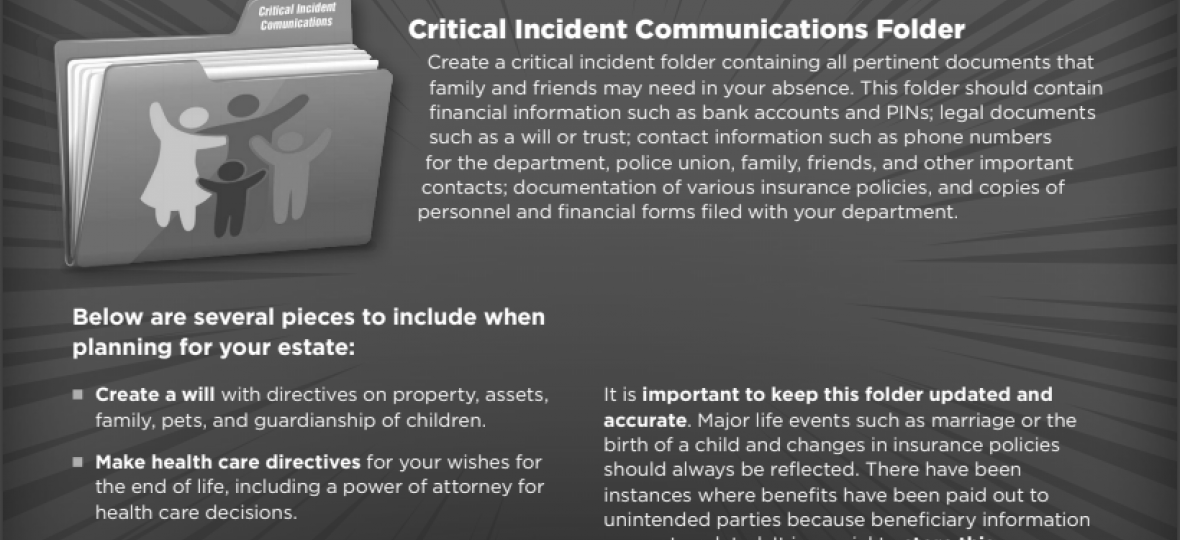
Preparing personal and family estates are important for law enforcement personnel. They can bring peace of mind to families given that law enforcement is routinely ranked as one of the most dangerous professions, with thousands of injuries and numerous critical incidents occurring each year.
Supporting Officer Safety Through Family Wellness: Discussing Your Job with Your Teen
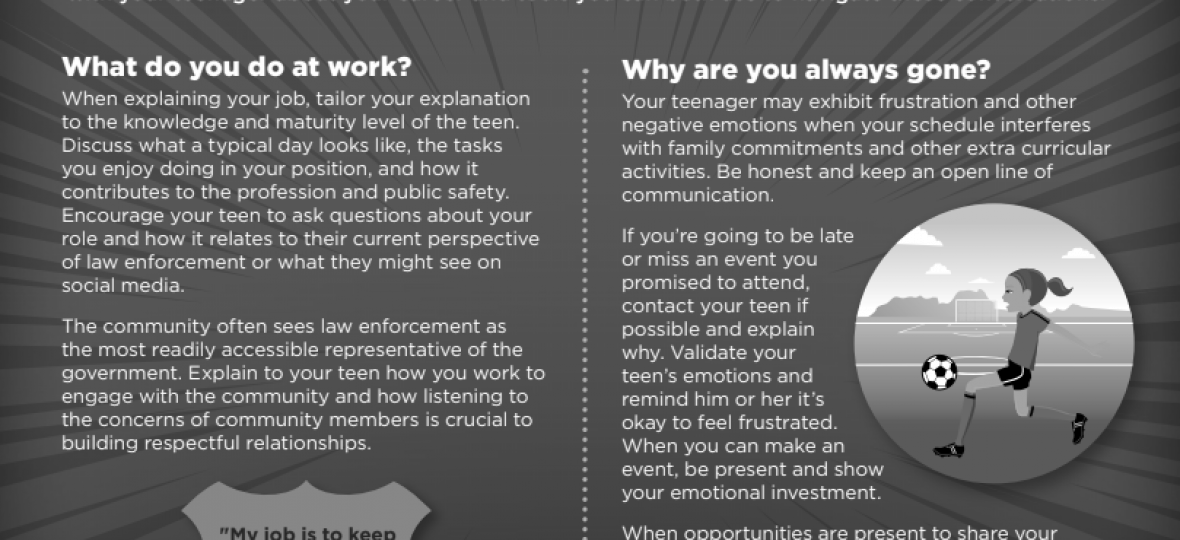
Teenagers of law enforcement families are sometimes faced with unique challenges, especially when it comes to navigating different views of the policing profession from their peers and social media. This resource includes suggestions for tackling potentially difficult conversations with your teenager about your career and tools you can both use to navigate these conversations.
Officer Wellness and Resiliency During the COVID-19 Pandemic
The COVID-19 pandemic presents unique challenges for law enforcement officers and deputies. During this time, you should prioritize your mental and physical wellness.
Stress During a Pandemic
- It is important to remember that everyone reacts differently to stressful situations. How an individual might respond depends on their background and personality, as well as the community they live in. First responders may react more strongly to a crisis such as COVID-19 due to the responsibility of maintaining public safety, the risk of exposure through interactions with the community, and the concern of exposing family members to the virus, among other stressors.
Pay Attention to Your Emotional Health
- With the evolving nature of this crisis upending daily routines and adding stress to everyday life, it is essential to pay attention to your mental and emotional health. Taking care of your health can help you think clearly and react to urgent needs in a timely manner, both at work and at home. While the current situation may seem overwhelming and out of control, focusing on the things you can control can help reduce stress.
How to Mitigate Stress and Cope with Changes and Uncertainty
- Stay informed by learning the most up to date facts about COVID-19 and understanding the steps you need to take at home and on the job to protect yourself and your family from catching or spreading the virus.
- Take care of your body by maintaining healthy habits such as eating nutritious food, exercising regularly, and getting plenty of sleep as well as steering clear of nicotine and excessive alcohol intake.
- Connect with others by maintaining social relationships with those close to you. Set aside time to connect virtually or over the phone to keep your support system informed and strong. To stay connected with the community you serve, consider using social media or virtual town halls.
- Practice mindfulness by taking short breaks to reset and recognize what you need to do to cope with your emotions. Mindfulness activities include finding time for yourself, practicing deep breathing, and participating in activities that you normally enjoy.
- Exercise or go for a walk
- Watch a movie
- Listen to music
- Read a book
- Spend time with loved ones
- Meditate or practice yoga
- Be creative through art
- Keep a journal of your thoughts
- Avoid too much exposure to news by taking a break from news updates related to COVID-19, this includes social media too. Staying informed is important, but too much information can become overwhelming and impact overall family wellness at home. Limit your exposure to news updates by refraining from turning on the news at home or setting a time frame where you will disconnect from news for the day.
- Seek help when needed by talking with those around you, such as your fellow officers, command staff, executive leadership, chaplains, family, a psychologist, and anyone you can confide in.1 Remember that you are not alone.
Following a natural disaster, 12% of individuals with low social support developed PTSD compared to 2.5% of individuals with high social support.2
Be Mindful of Those Around You
- If you feel edgy or stressed, those around you are too. Remember to practice empathy and compassion and support others because they might respond to stress differently than you.
- Having patience is important for both the officer and their loved ones. The day-to-day law enforcement job stressors, coupled with anxiety from family members about their loved one in the field or coping with additional family members and children in the home, can enhance the already-existing worries associated with COVID-19. Remind yourself to be patient and listen to one another.
- Deliberate breathing can reduce negative feelings including hostility, guilt, and irritability and reduce physiological markers of stress.3
- Check on those in your support system, because even while stuck in tight quarters or out on the streets, it may become difficult to stay connected to colleagues, family, and friends.
- Among police, social support from colleagues is associated with less psychological distress in the face of traumatic events.4
Reflecting daily on what you are grateful for can help people to sleep 31 minutes longer per night.7
- Life right now is fundamentally different, so practicing gratitude can pay dividends. Focus on the good in your life and not the negatives that are out of your control.5
- Keeping a gratitude journal has been shown to increase well-being while significantly lowering depressive symptoms.6


