
Resources
IACP's resources are aimed at helping law enforcement executives do their jobs better and cover a variety of topics, including professional development, leadership, management, and supervision, as well as hot topics such as ethics.
Resources
CRI-TAC Tribal Brochure

 The Collaborative Reform Initiative Technical Assistance Center (CRI-TAC) provides customized technical assistance solutions designed to meet the unique needs of state, local, tribal, and campus communities throughout the United States.
Violence Against the Police
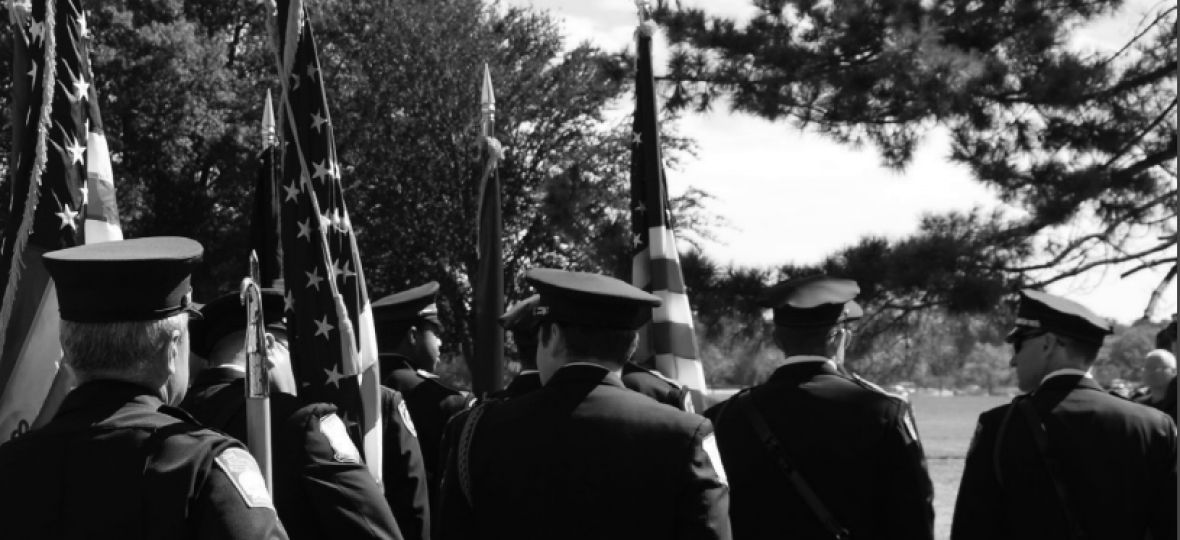
In November 2016, following ambush attacks on four officers in three states in a 24-hour period, IACP President De Lucca sent this message out to membership declaring violence against law enforcement must end. In response, IACP established a task force of committed law enforcement executives to explore the issue of violence against the police and make concrete recommendations to prevent further tragedies. Follow the work of the task force on the IACP blog.
A feature article in the October 2017 issue of Law Enforcement Technology magazine discusses global violence against law enforcement and the work of the task force. Read more.
 Preventing Line of Duty Deaths: A Chief's Duty
This agency self-assessment tool is designed to help law enforcement leaders evaluate their agency's efforts to address the safety needs of officers. Use this tool to proactively examine the range of critical officer safety strategies and determine areas where your agency can improve.
Training Key - Officer Safety and Violence Against the Police
This Training Key® is organized into brief examinations of individual law enforcement functions and situations that are most often correlated with officer felonious deaths and assaults. Each section provides an overview of the topic and a synopsis of best practices and procedures for preventing or mitigating the risk of death and injury of officers. References to related IACP model policies are included.
 Ambushes
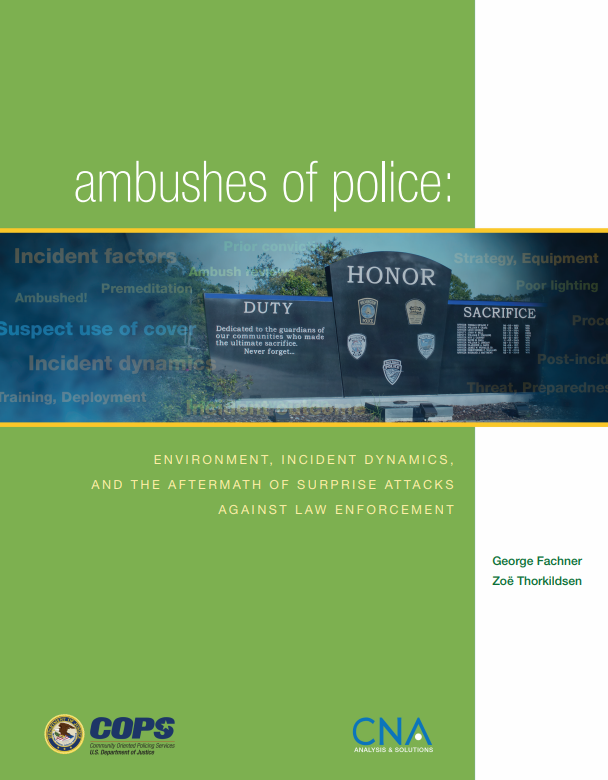
The reports below, developed based on findings from the Federal Bureau of Investigation’s Law Enforcement Officers Killed and Assaulted (LEOKA) in the Line of Duty data collection program, provide a comprehensive look at the nature of ambush attacks perpetrated against law enforcement officers in the United States since 1990. Included are classifications of ambush attacks, incident trends, and overviews of agency, victim, and perpetrator data, weapons used in ambushes, and survivability and clearance rates. Updates to these reports are underway, bringing the data current through 2016.
Developing an Anti-Bullying Program: Increasing Safety, Reducing Violence
This publication is one in a series of briefs written for law enforcement leaders to facilitate the development of proactive juvenile justice programs. In This Issue:
• Bullying
• Bullying Research
• IACP Program Information
• Fight Crime: Invest In Kids
Bullying in Schools: An Overview
Effective Youth Diversion Strategies for Law Enforcement
Line of Duty Deaths
Ensuring that officers return home safely at the end of each shift is a paramount concern for all law enforcement leaders. The IACP in partnership with the Officer Down Memorial Page is committed to honoring fallen law enforcement officers while also raising awareness about line-of-duty deaths.
Analyzing trends and causal factors is key to understanding and preventing future line-of-duty deaths. The info-graphics linked below, created by ODMP display the year-to-date report for the Line of Duty Deaths for each month.
IACP recognizes that one of the tougher challenges facing any police executive is handling a line-of-duty death within a department. To support the agency head who must respond to this challenge, and to add IACP's acknowledgment of the sacrifice, IACP has established this program. The tribute is to be presented to the closest surviving family.
Because of the nature of this recognition, there is no specific due date for the application. However, due to unfortunate demand, we must limit applications to those officers who have died within the past year. The IACP Tribute to Slain Officers Program is administered through the Division of State Associations of Chiefs of Police (SACOP). For more information, please email [email protected]
Application
Active-duty officers who die by felonious or accidental means during the course of performing police functions while on — or off — duty. There is no cost for the IACP Tribute.
Resources

Law Enforcement Officers Killed by Felonious Assault in 2011
This report focuses on prevention through awareness by bringing together brief summaries of each line-of-duty death from felonious assaults in 2011. Recorded incidents have been categorized by call type. The classification was used to break down the summaries in order to better understand and begin thinking about prevention.
Current and Previous Reports
August 2018 Monthly Line of Duty Deaths Report
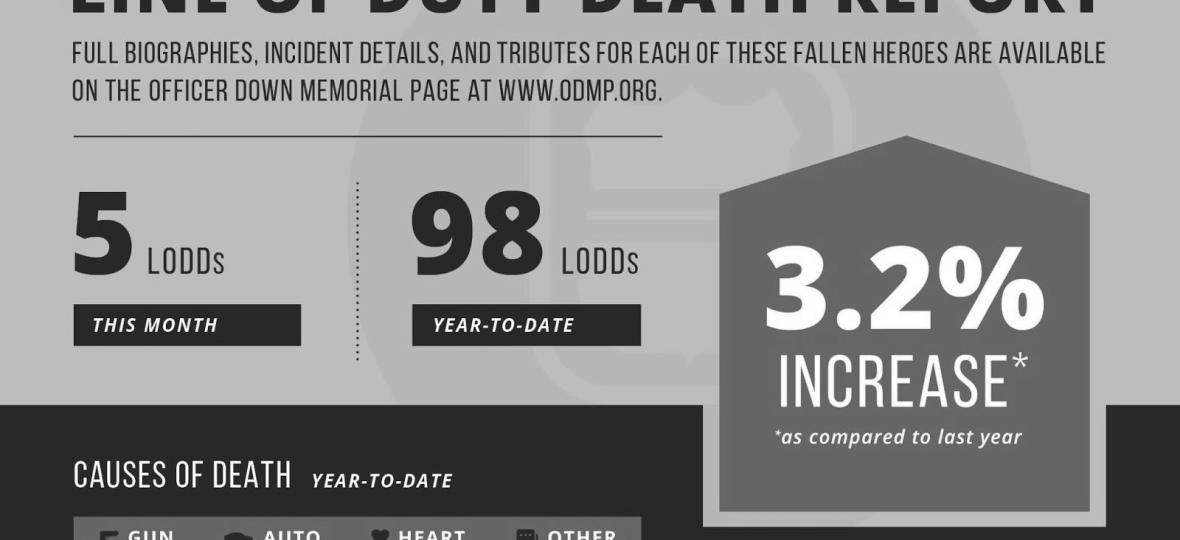
The monthly United States Line-of-Duty Deaths Report is a joint publication of the International Association of Chiefs of Police (IACP) and the Officer Down Memorial Page (ODMP). IACP and ODMP are committed to honoring fallen law enforcement officers while also raising awareness about line-of-duty deaths, including related trends and causal factors.
Trust Initiative Report
This report is a culmination of the Trust Initiative, which was started under President Louis Dekmar. The Trust Initiative brought together over 30 stakeholders across not only law enforcement but various advocacy groups to compile thoughts and recommendations on the current status of policing. Four listening sessions followed, these sessions were conducted throughout the U.S. and confirmed many themes and recommendations the Advisory Board had drafted. This report provides themes and recommendations about the current status of policing, history and how if effects today's officers, and other relevant recommendations.
September 2018 Monthly Line of Duty Deaths Report
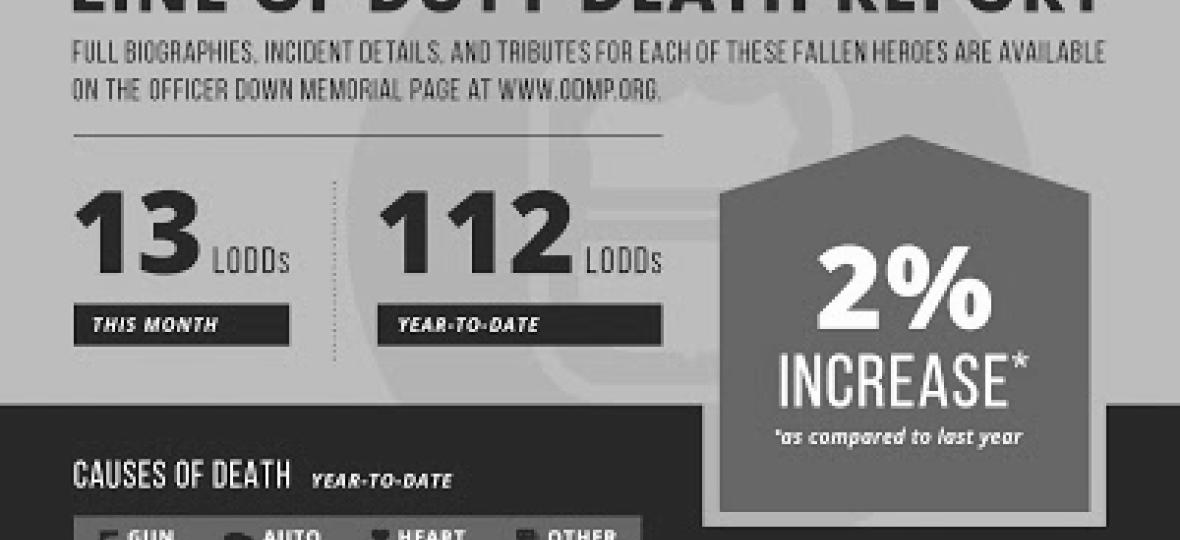
The monthly United States Line-of-Duty Deaths Report is a joint publication of the International Association of Chiefs of Police (IACP) and the Officer Down Memorial Page (ODMP). IACP and ODMP are committed to honoring fallen law enforcement officers while also raising awareness about line-of-duty deaths, including related trends and causal factors.
IACP 2018 Opening Ceremony

This year IACP welcomed General Stanley McChrystal to address the IACP 2018 Opening Ceremony. A retired Army general and former Commander of U.S. and International Forces in Afghanistan, McChrystal brought together intelligence and operations to achieve success, as well as creating a counter-terrorism organization revolutionizing the way military agencies interacted. He shared his insights and leadership lessons focused on building cohesive, forward-thinking, results-oriented teams.
Police Facilities Planning Guidelines

An effective police agency evolves to meet the ever-changing needs and demands of the community it serves. Unfortunately, many police agencies are housed in facilities that, while built for long-term service, have become inadequate for actual departmental functions. Since most communities will only design and build a new police facility every 40-50 years, few police administrators and local architects know the challenge of planning, designing, and constructing a new police facility; a task that can be both frustrating and expensive if some basic guidelines are not followed.
This document provides law enforcement executives and project managers with a planning model applicable to all types and sizes of facility projects. It cannot be emphasized enough that the design process requires a team effort including law enforcement, government officials involved in finance and building requirements, and architects familiar with the specialized design of public safety facilities. The goal of this document is to guide law enforcement executives through the facility planning process and alert them to specific design and construction considerations. While design and construction issues are unique to each jurisdiction, core planning steps are essential to every jurisdiction.
The guidelines cover four basic stages of the design and construction process:
- Phase I: Build Support for the Project
- Phase II: Pre-Planning and Analysis
- Phase III: Project Design and Delivery
- Phase IV: Project Construction & Occupancy
Additionally, IACP has developed case studies that showcase a variety of police facility planning projects that have been completed in the past ten years. Each case study was written by the lead architecture firm overseeing the facility design and construction. The case studies contain pertinent information about the projects, to include timeline, budget, goals, challenges, and outcome. They also highlight different planning processes and construction methods, as well as innovative solutions to the numerous challenges that can arise during a complex facility project.
Planning, Designing, and Constructing Police Facilities Course
For more in-depth training on this process, attend an IACP Planning, Designing, and Constructing Police Facilities course. Upcoming course information is available at theIACP.org/PoliceFacilities.
National Special Weapons and Tactics (SWAT) Study
Prior research tells us Special Weapons and Tactics (SWAT) approaches vary across all of the state, local and tribal law enforcement agencies in the United States (U.S.), of which there are more than 17,000. In particular, SWAT staffing levels, composition, policies, training, and deployment can fluctuate noticeably when looking at major, midsize, and smaller agencies. Looking at SWAT operations from a policy perspective we also know there are substantial variations in the components that go into a SWAT or special operations unit, including, but not limited to, tactical, canine, conflict resolution, and medical response. The compositions of SWAT units vary as well, from functions staffed exclusively by fulltime personnel, to those operated by part-time personnel, and those which use both full- and parttime personnel. SWAT is often included in a broader special operations division (SOD) in many major county and city departments. There is also variation in the jurisdictional reach of SWAT, with some designed as city- or county-specific, while others may serve multiple cities within a specified region. Lastly, local SWAT teams often work in partnership with federal SWAT or special operations units, further complicating how SWAT activity statistics are collected, analyzed, and reported.
Over the past several decades, the National Tactical Officers Association (NTOA) has worked diligently to create and support the implementation of best practice policies into SWAT operations across the U.S. Performance standards have been developed, as well as guidelines for minimum training, model policies, and learning validation, measuring officer comprehension and retention of policy details. Due to the complexity of the issue and a need from the law enforcement field, the NTOA contracted the International Association of Chiefs of Police (IACP) to conduct a national research study assessing critical trends and issues related to SWAT in the United States from 2009 through 2013. To avoid any unintended bias, the IACP engaged the services of the National Opinion Research Center (NORC) at the University of Chicago to provide data analysis.
Through the development and implementation of the national survey, the NTOA has collected information from 254 law enforcement agencies regarding teams composed of specially selected, trained, and equipped personnel who are activated and, if necessary, deployed to resolve high-risk incidents.
Many individuals have a reasonable interest in understanding SWAT practices more fully, particularly citizens, the media, community organizations, and governing bodies. Generally, these individuals rarely get a chance to hear firsthand from either SWAT members or those involved in a SWAT action, which could help them better understand the complexities of SWAT deployments. This report reveals the results of the research studies and looks into the composition of SWAT teams, protocols, practices, training procedures, community relations, deployment decisions, outcomes, and incident reporting.


