
Resources
IACP's resources are aimed at helping law enforcement executives do their jobs better and cover a variety of topics, including professional development, leadership, management, and supervision, as well as hot topics such as ethics.
Resources
National Policy Summit on Community-Police Relations

In response to events in Ferguson (MO), New York City (NY), and Cleveland (OH) in 2014, the IACP held a National Policy Summit on Community-Police Relations in October of that same year to open dialogue regarding ways to build and sustain trusting community-police relationships. The summit brought together law enforcement leaders, representative from NAACP, ACLU, Leadership Conference on Civil rights, Lawyers Committee on Civil Rights, as well as various representatives of local civil rights and community groups, to discuss the current state of community-police relations and how to advance a culture of trust and inclusion, and improve relations.
The resulting summit report is a road map and a call to action for law enforcement, communities, and stakeholders, providing ways to improve, strengthen, and rebuild communication and transparency within the community. The report defines three overarching conceptual elements of strong community-police relations: communication, partnership, and trust, and goes on to list recommendations for each of these categories.
The report also makes clear that the challenges currently being faced by law enforcement, were not created in a vacuum, and cannot be solved by law enforcement alone. Instead, the solution lies in making progress in a number of areas, and requires coordination and collaboration at all levels. Therefore, recommendations for key stakeholders, such as community and political leaders, are also included in the report.
National Summit on Intelligence: Gathering, Sharing, Analysis, and use after 9-11
Criminal intelligence sharing in the United States has come a long way since March 2002, the date of the first summit on criminal intelligence sharing, co-sponsored by the International Association of Chiefs of Police (IACP) and the U.S. Department of Justice Office of Community Oriented Policing Services. That summit resulted in the National Criminal Intelligence Sharing Plan and a council of law enforcement executives—the Criminal Intelligence Coordinating Council—to oversee its implementation. There were other achievements, too. The Global Justice Information Sharing Initiative produced dozens of products to help law enforcement agencies share information and intelligence. Fusion centers and Joint Terrorism Task Forces fostered new levels of communication and collaboration across jurisdictions. The Federal Government created the Department of Homeland Security, the Office of the Director of National Intelligence, and the Office of the Program Manager for the Information Sharing Environment.
The participants in the follow-up 2007 IACP Criminal Intelligence Sharing Summit nevertheless made it clear that many of the nation's law enforcement agencies do not participate in the criminal intelligence sharing plan. Too many state, local, and tribal agencies, it would seem, underestimate their importance to the criminal intelligence sharing process, overestimate the burdens of full participation, and/or remain unaware of how to contribute to the vital work of the plan.
Offender Re-Entry: Exploring the Leadership Opportunity for Law Enforcement Executives and Their Agencies
In 2006, the IACP, in collaboration with the COPS Office, brought together over 100 law enforcement, correctional, and community leaders for a two day summit to address the issue of offender re-entry and in particular, the role of local law enforcement in re-entry programs. The results of that summit are contained in the final summit report: Offender Re-Entry: Exploring the Leadership Opportunity for Law Enforcement Executives and Their Agencies. The report provides 50 detailed recommendations to help police leaders determine how they can drive down recidivism rates by supporting local offender re-entry initiatives.
Taking a Stand: Reducing Gun Violence in Our Communities
Nearly 30,000 American lives are lost to gun violence each year—a number far higher than in any other developed country. Since 1963, more Americans died by gunfire than perished in combat in the whole of the 20th century.
The impact goes far beyond the dead and injured. Gun violence reaches across borders and jurisdictions and compromises the safety of everyone along the way. No other industrialized country suffers as many gun fatalities and injuries as the United States. And no community or person in America is immune.
Law enforcement understands and embraces its leadership role in combating gun violence. When Federal Bureau of Investigation data for 2006 showed gun violence rates rising for the second year in a row with many Midwest cities leading the trend, the International Association of Chiefs of Police (IACP) convened law enforcement leaders and others concerned with gun violence from around the Midwest in Chicago in April 2007 at the Great Lakes Summit on Gun Violence, with support from the Joyce Foundation. Attendees reviewed the research, listened to experts, shared information and worked hand in hand to draft recommendations. This report comes from a regional group, but addresses a national problem, and it demands national attention.
Policy Summit: What do Victims Want? Effective Strategies to Achieve Justice for Victims of Crime
Police are uniquely positioned to assume a leadership role in promoting victim rights and servicing their needs. Police 911 dispatchers and responding officers are the first justice system representatives that most victims of crime encounter. Accordingly, police have a special opportunity to begin to repair the harm done by crime.
Violent Crime in America: Summit Recommendations
A National Commitment
Local law enforcement officers cannot solve the problem of violent crime in their communities by themselves. The problem is too dynamic and pervasive to be dealt with by isolated responses. The nation must make a commitment to itself to end violent crime, just as it made a commitment three decades ago to place a man on the moon. The task would be far more challenging, and surely one which must be shared by all elements of our society.
Create a presidential commission on crime and violence. An interdisciplinary approach to solving the menacing problem of crime and violence in this country is sorely needed. To do this necessitates bringing together the best law enforcement practitioners, who deal daily with the problem of violent crime, and experts from other relevant disciplines. The mandate of the commission would be to develop a comprehensive national crime plan. This august group would develop a blueprint for the 1990s that focuses massive government resources on truly waging a war against those who engage in the business of misery, despair and death.
Create a system of federally funded and maintained low-security regional facilities for convicted non-violent offenders. The primary purpose of these federal facilities would be to free cells in overcrowded state and federal high-security prisons that should be incarcerating repeat and violent offenders. These federal facilities, which would accept both prisoners from both state and federal judicial systems, should require inmates to perform useful labor rather than permitting them to sit idly in prison—the bootcamp philosophy. These facilities should provide drug treatment for offenders to relieve pressure on already oversubscribed local treatment facilities.
Legislate a good-faith exemption to the exclusionary rule of evidence in both state and federal courts. By not allowing the introduction of evidence seized by law enforcement officers, acting in good faith but inadvertently violating technical restrictions, the courts have diminished the effectiveness of law enforcement agencies, particularly in controlling crimes involving drugs and guns. Legislation should provide relief for situations where a warrant has been issued, as well as situations where one is not needed.
Create a national anti-violence voluntary contribution fund. Allow federal taxpayers to voluntarily contribute one dollar of their annual income tax refund to a special violent crime fund. The funds would be channeled back to local agencies for use only to augment, not replace, local funds provided to combat violent crime. The distribution formula would be determined by the proposed Presidential Commission on Crime and Violence. Such a formula should consider funding for smaller communities dealing with a growth of violence within their boundaries. However, emphasis is needed to direct additional resources to locales where major crime violence is statistically shown to be a breeding ground for spill over into other communities. In essence, attention should be focused on "cutting off the head of the dragon."
In recent years, the number of individuals possessing guns of all types has increased dramatically. Many of these weapons have been purchased legally by citizens for sporting or valid home-defense purposes. Others, however, have been purchased illegally or stolen from their rightful owners. These weapons find their way into the hands of individuals who acquire them to support criminal activities, often drug dealing and robbery. Guns are now regarded and used as the most effective and final means of conflict resolution. Situations that in the past would have been resolved by negotiation or even a fist fight are now settled quickly by gunfire.
The following recommendations on guns must be viewed and acted upon as a comprehensive package. We believe that none of these recommendations alone will solve the problem of illegal gun use.
Tighten restriction on firearms purchases. The easy availability of guns to all citizens has elevated "death by shooting" to one of our primary methods of conflict resolution. Measures at the federal level, such as waiting periods, are needed to ensure that an individual seeking to purchase a firearm at the retail level is legally competent to do so. States should also enact legislation to provide for better identification of weapon purchasers. Restrictions on licensed sellers should be enhanced and licensees' operations should be inspected on a more regular basis to ensure compliance with all federal, state and local laws.
Limit the manufacture and sale of automatic and semi-automatic assault-type firearms. The deadly flow of military assault-type automatic and semi-automatic weapons onto U.S. streets and into the hands of violent criminals means that all too frequently the superior firepower belongs to the criminals, not law enforcement. These weapons have no sporting and/or hunting purpose. Rather, they are used by those who desire "ultimate firepower" in order to quickly kill or seriously wound large groups of persons. Manufacture and sale of assault weapons to the general public should be prohibited. Federal legislation to this effect is needed immediately.
Enact tough state sentencing and weapons destruction legislation. To discourage the use of guns by individuals committing crimes, states should enact sentencing reforms that would automatically increase the period of incarceration of an individual who commits a crime while in possession of a weapon. Legislation is also needed that requires destruction of weapons used illegally and seized by law enforcement agencies, rather than have them sold at auctions, thereby eliminating the risk of having those same weapons reintroduced in criminal situations.
None of these recommendations are made or intended to abridge any right, prohibit, or prevent the lawful purchase of legal firearms by citizens for sporting or valid home or business defense purposes.
The proliferation of the illegal drug trade and its attendant criminality have forced us to rethink some of our basic tenets of crime fighting. Much of the violent crime in the United States of America is fueled by drug trafficking. A comprehensive program that combines education, enforcement, and treatment is needed to respond to this country's perennial drug threat problems.
Develop and use educational programs. Proactive programs designed to discourage drug use by individuals at the local level should be developed and utilized. Programs that involve police in school teaching activities have proven to be very effective in increasing drug awareness and instilling respect of the rule of law among participants. Employers should be encouraged to develop drug-free workplaces and both employers and community leaders should work to establish detection programs to identify users at the earliest stage for referral to treatment programs.
Revitalize the focus and emphasis on interdiction and detection. The role of the military in supporting the nation's drug suppression effort should be re-evaluated to ensure more efficient and effective use of committed resources. The advice and counsel of state and local law enforcement professionals should be solicited in this effort. Measures to protect the country's borders against infiltration by illegal aliens smuggling contraband drugs should be increased. Additionally, the State Department should become more aggressive in efforts to restrict the flow of drugs from known sources by pushing for the imposition of unilateral sanctions. The expanded use and funding for multijurisdictional task forces to make coordinated attacks on drug traffickers is encouraged.
Incarcerate violent and non-violent offenders. States should adopt model drug sentencing legislation that includes mandatory sentencing requirements as well as enhanced penalties for repeat offenders. Convicted non-violent offenders should serve sentences in low-security facilities, established and funded by the federal government, to free up space for violent criminal offenders. In addition, drug traffickers should continue to face the certainty of asset forfeiture as a deterrent and as a resource to assist local law enforcement officials in drug suppression efforts.
The rise of gangs has fueled much of the increase in violent crime. What were once loose-knit groups of juveniles and young adults involved in petty crimes have become powerful, organized gangs. There appear to be gangs intent on controlling lucrative drug trade through intimidation and murder and also street gangs simply claiming turf. Today, as never before, cities and neighborhoods, even those without long histories of youth gang activity, have been literally overrun by both types of gang violence. While gangs are not new, today's level of gang violence, organization, and sophistication is unprecedented.
Acquire and provide more information and intelligence on gangs. Effective training programs and a methodology that will lead to the development of a common intelligence- gathering system are desperately needed by law enforcement. A national database should be established, preferably by the FBI, to supply photos, nicknames, fingerprints, criminal history, and other information regarding known gang members.
Enact new laws directed at illegal gang activity. Consideration should be given to enhanced sentencing and RICO-type legislation at the federal level for individuals who participate in gang activities and terrorize communities or individuals. Provision for asset forfeiture should be decreed to allow confiscation of automobiles used in drive-by shootings. Legislation should be passed at the state level making it illegal to solicit juveniles to engage in violent criminal activities. Also, witness protection programs should be mandated to aid witnesses and victims.
Enact juvenile-justice system reforms. While restricting dissemination of arrest records and limited sentencing may be acceptable when dealing with youthful indiscretions, other standards must be applied to young individuals who intentionally commit murder, rape, or aggravated assault, or engage in armed robbery. Complete juvenile criminal records should be made available on all violent offenders so that past crimes may be considered at time of sentencing. Violent juvenile offenders should be subject to pretrial detention as well as being fingerprinted after committing felony crimes.
Encourage multijurisdictional cooperation and the use of outreach programs. Joint task forces should be established and funded to facilitate resource and information sharing to cope with gang activity trafficking within different jurisdictions. Intervention programs should be expanded and improved upon in an attempt to dispel the idea the gang membership is a viable substitute for family life.
For all of the innovation and progress brought to the law enforcement professions and our system of criminal justice in the last 30 years, it sometimes appears that we have gone backwards. The violent crime problem has seriously eroded the quality of life for many of our citizens, some of whom have become virtual hostages in their own homes for fear of the violence that awaits them on the streets of their neighborhoods. To protect our citizens and to have an immediate and continued impact on violent crime, we must identify, apprehend, and incapacitate the violent criminals preying on society. The 14 recommendations set forth are designed to help accomplish this. Of all of the measures we might employ to reverse the current surge of criminality, none can hope to be effective unless we strengthen our police forces.
The leadership of the IACP urges immediate consideration of and action upon the recommendations of the Violent Crime Summit participants by President Clinton and members of his administration, the U.S. Congress, and state and municipal executives and legislatures.
The IACP further urges support and action by our nation's system of criminal justice and especially the chiefs of police who can assume leadership roles at the state and local levels. We invite the media to assist by educating the public on violent crime issues and supporting our recommendations. Above all, we ask the citizens of this country to rally against violent crime, to cease tolerating violent crime at any level and in any form. Without public demand, sustained progress is not likely to occur.
National Summit On Wrongful Convictions: Building a Systemic Approach to Prevent Wrongful Convictions
The International Association of Chiefs of Police (IACP) gathered 75 subject matter experts to create a national strategy to prevent and reduce wrongful convictions.
The premise of the IACP summit, a unique event where the law enforcement community took the lead on a national symposium on the topic of wrongful convictions, was that any wrongful conviction is one too many. The damage done to the defendant, the crime victim, investigators, prosecutors, defense attorneys, the entire justice system, and the community is massive. From a uniquely law enforcement perspective, the damage done to the trust bond between the police and their communities is significant. And the damage goes even further as the true criminal remains free to commit new crimes and create new victims. Looking beyond extremely violent felonies—often a focus of research in this area—how many lives are ruined when a young person is sentenced for robberies or burglaries they did not commit?
Police Summit: Youth Violence in America
STRENGTHEN THE FAMILY
- Provide increased services for dysfunctional families and damaged children.
- Increase intervention in domestic violence situations by all relevant agencies.
- Promote the family as the true "home" for good direction, support, teaching of values, and advice to children.
- Create more child advocacy centers where youth can go for support and advice.
- Encourage and support programs, including parenting classes and sex education to prevent teen pregnancy.
- Explore, investigate, and evaluate the efficacy of parental responsibility and accountability policies and laws.
- Provide more support for parents who lack basic parenting and family management skills.
CLARIFY THE ROLE OF THE COMMUNITY
- Establish local delinquency prevention councils to foster community involvement in prevention.
- Build community teams including churches, schools, community-based programs and law enforcement to fight violence in a coordinated manner.
- Create adult mentor programs in neighborhood centers, schools, juvenile detention and correctional centers.
- Increase the involvement of youth in the discussion and development of solutions/policies regarding youth-related issues.
POSITION LAW ENFORCEMENT AS A CATALYST FOR CHANGE
- Promote the aggressive investigation of all violent crimes and the arrest and detention of violent youthful offenders.
- Increase the number of sworn, trained and equipped community policing officers.
- Create a resource manual for law enforcement agencies that clarifies existing community/government programs to support community policing.
- Reprioritize police resources, increasing the numbers of youth service, school resource, DARE, and GREAT officers available.
- Increase the level of federal support and technology for small/rural police departments to support youth violence reduction.
- Improve police department/school relationships to be more effective, expanding the SRO role to provide non-traditional in-school services.
- Conduct research to identify and evaluate those police programs for youth that are effective.
- Revise training curriculum of police officers on how to approach potentially violent confrontations with youth.
- Increase the availability of technology support to local police PCS, laptops, crime analysis software, gun tracing centers, to anticipate and interdict violence.
- Improve/expand the training for school resource and youth officers to reflect current needs and to utilize anger/violence reduction techniques.
- Recognize and reward non-traditional police performance to balance officer perception of the importance of these activities.
- Call for a universal increase/expansion of community policing efforts to increase interaction between community-based youth programs and the police.
STRENGTHEN THE SCHOOL ENVIRONMENT
- Identify effective programs to keep troubled/trouble-making students out of classrooms and in alternative programs.
- Utilize school facilities, where available, as centers for community activity after school, during evening hours and throughout summer months.
- Put standards in place to promote a safe, disciplined learning environment, for example uniforms, dress codes, zero tolerance for drugs, alcohol, weapons.
- Keep as many schools as possible open after hours safe havens for students, with expanded versus reduced extracurricular activities.
- Bring law enforcement officers into schools in leadership roles, using a team approach between police and teachers.
- Create a tone of zero tolerance for juvenile crime of all types on school campuses with swift punishment and effective alternative sanctions in place.
- Create greater resources for alternative education programs for high-risk children with emotional/behavioral problems.
- Promote stronger financial/programmatic commitment to public schools to insure equitable resources to all types of communities.
- Integrate violence reduction strategies and training into existing course materials in schools.
- Reform and redesign teacher educational curriculums to respond to real current needs.
TREAT YOUTH VIOLENCE AS A HEALTH ISSUE
- Create a national awareness campaign treating youth violence as a public health crisis/disease.
- Ensure that medical personnel in emergency rooms provide services beyond triage to youths evidencing injuries from weapons or other violent confrontations.
- Develop mandatory public health programs in schools and that treat youth violence as an "epidemic."
IMPROVE THE JUSTICE SYSTEM'S ABILITY TO RESPOND
- Expand the use of juvenile assessment centers where teams of professionals assess a child's needs and make recommendations prior to/or after adjudication.
- Develop a "swift and sure" justice model for all criminal acts, with immediate and graduated sanctions that are local and community based.
- Put in place a new system for determining juvenile v. criminal court jurisdiction that is rational and based on the principals of individualized justice.
- Enact laws that give juvenile courts jurisdiction over parents and hold them liable for criminal acts of children.
- Create an omnibus correctional program within the juvenile justice system that insures both secure removal from society and educational/rehab opportunity.
- Develop deterrent programs for first time offenders, that include punishment, restorative justice for victims, use of teen courts and peer panels.
- Train local agencies to establish better criteria/methods to identify habitual offenders, making more effective use of SHOCAP.
- Ensure a consistent, continuum, approach to violent youth with incarceration for the most violent offenders.
- Take strong countermeasures to deglamorize gang lifestyle, using RICO statutes, safe street task forces, to indict gang members and reduce gang activity.
- Expand victim/offender interaction in the juvenile justice system to promote healing of victims and full accountability for offenders.
CREATE STRONGER MULTI-AGENCY PARTNERSHIPS
- Create model programs to demonstrate how criminal,juvenile, and family court systems can share information to interdict future violence.
- Expand alliances among social service, education, mental health, public health, child welfare, juvenile justice and law enforcement agencies.
- Increase the collaboration and cooperation among federal agencies like Departments of Justice, Education, and Health and Human Services.
- Design multi-agency teams where clear policies are in place, resources are shared, participation is monitored, all are accountable, and each partner makes equitable contributions of staff/monetary resources.
EDUCATE THE PUBLIC ON YOUTH VIOLENCE
- Encourage local and national media to provide balanced coverage of youth issues by including positive youth activities and successful programs.
- Demand that the media (network/cable TV, movie industry, music industry) be accountable for its programming, balancing its representation of violence.
- Make use of total cost data to dramatize the true economic consequences of youth violence, with an emphasis on the quality of life lost.
- Educate citizens on the reality of gun injuries (accidental injury, death) to refute the perceived "safety" of owning/carrying guns for self protection.
EXPAND/EVALUATE PROGRAMS THAT WORK
- Disseminate information about programs that work to local officials who can replicate these programs.
- Provide more information and technical assistance to all local agencies on successful youth violence programs through the Office of Justice Programs, particularly OJJDP.
- Provide additional funding support to proven programs, like the Boys and Girls Clubs, Police Athletic Leagues, plus newer/innovative programs.
- Create more summer jobs for youth through public/private partnerships involving recreation departments, schools and youth employment programs.
- Encourage implementation of locally driven youth violence prevention strategies that include goal setting, reinforcing positive lifestyles, and extensive mentoring opportunities.
- Ensure the commitment of federal, state and local resources to help replicate and expand solid grass-roots violence-reduction efforts.
- Provide aggressive evaluation and measurement of current programs, retooling/revamping ineffective responses to better fit community/youth needs.
IMPROVE INFORMATION SHARING AMONG PROGRAMS
- Establish solid information sharing systems among police, justice, and school officials engaged in multiple community-based youth programs.
- Create, and make available where appropriate, juvenile CHRI to aid law enforcement and justice personnel respond effectively to youthful offenders.
- Eliminate as many barriers as possible to promote information sharing among law enforcement, public health, social service, education, treatment and community-based programs.
- Introduce, if necessary, legislation to mandate the sharing of information on juvenile offenders by police, courts, schools, and program agencies.
Starting with What Works

With funding from the Laura and John Arnold Foundation, the International Association of Chiefs of Police (IACP) and George Mason University Center for Evidence-Based Crime Policy (GMU) collaborated to conduct an evidence assessment of the 21st Century Policing Task Force recommendations and action items.
The Starting with What Works: Using Evidence-Based Strategies to Improve Community and Police Relations brochure lays out practical steps that provide a road map to help law enforcement and communities reduce crime and strengthen relationships.
President's Taskforce on 21st Century Policing
Evidence Assessment of President's Taskforce on 21st Century Policing

With a grant from the Laura and John Arnold Foundation, the Institute for Community-Police Relations of the International Association of Chiefs of Police (IACP) has collaborated with researchers from George Mason University’s (GMU) Center for Evidence-Based Crime Policy to create an evidence-based Blueprint for 21st Century Policing. The research team was charged with reviewing existing research knowledge about those Task Force recommendations relevant to state and local law enforcement, highlighting promising efforts based on research knowledge, and identifying issues that need more research and testing.
Including research in the conversation about law enforcement policy and practice—an idea known as evidence-based policing—has become an important value of law enforcement. Evidence-based policing is based on the idea that research knowledge is an essential part of police decision-making and can provide expertise and an objective perspective for a complex profession.
Toward those ends, the goal of this assessment of the research knowledge behind the 21st Century Policing Task Force Report recommendations is to provide information about what we know from research about those recommendations and what more needs to be learned through police-research partnerships to advance them.
Promising Practices in Tribal Community Policing
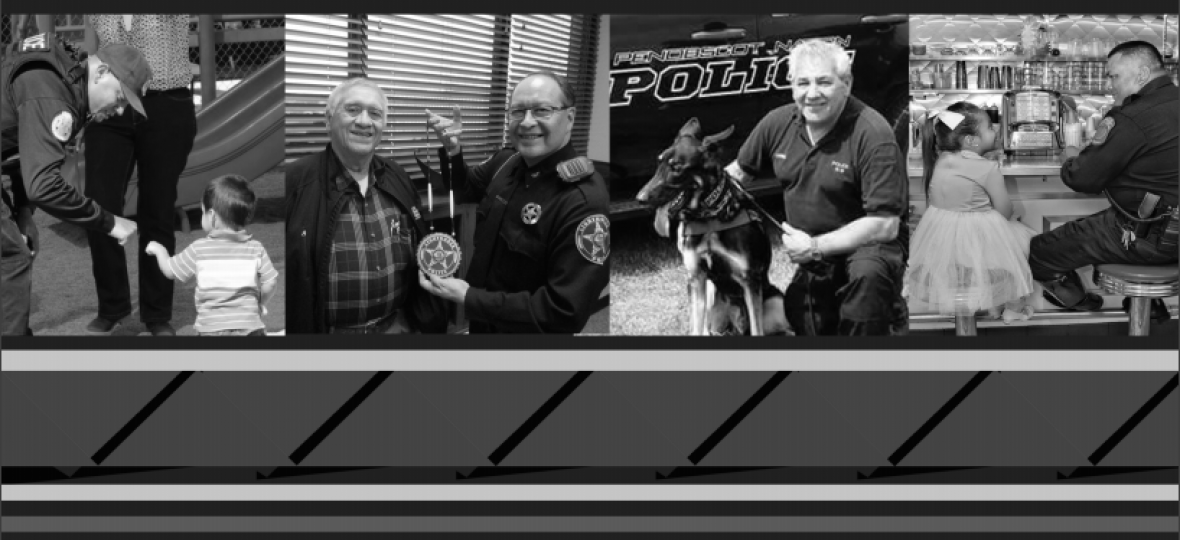
In the face of resource deficiencies, complicated jurisdictional issues, and what are often vast geographic coverage areas, this sentiment is shared by virtually all tribal law enforcement agencies. Tribal law enforcement prioritizes being there for the people they serve through standard policing functions, community events, and day to day interpersonal interactions. Community policing is not a program or activity in Indian country; rather, it is a guiding philosophy and way of life.
In 2013, the U.S. Department of Justice, Office of Community Oriented Policing Services (COPS Office) and the International Association of Chiefs of Police (IACP) partnered to explore what community policing looks like in Indian country and what specific strategies work well for tribal law enforcement.
Being small and self-governed, tribes are well-positioned to engage tribal members in helping to identify and solve safety problems in the community. Tribal law enforcement has the ability to be nimble and, with the support of the tribal government, test new and innovative justice ideas. This publication explores strategies in community policing:


