Critical Incident Management

Critical Incident Management

Blog Post

Responding to a critical incident requires a complex and multi-faceted approach - the way in which the event is handled can quickly determine whether it evolves into a crisis situation. While proper preparation for such events is crucial, planning for the unknown can often feel like a daunting task.

To help agencies address critical incidents in their communities, IACP Immediate Past President Cynthia Renaud convened a group of police leaders to examine the topic of critical incident response. Divided into three subcommittees, participants focused on steps agencies can take to prepare for, manage, and recover from, a critical incident.

The following provides a brief overview from each of the subcommittee chairs and highlights key takeaways and leading practices from the discussions. A supplemental list of IACP resources is also included to provide additional policy guidance and examples from the field.

In addition, find the Speakers Series Session from IACP 2021: Critical Incidents: Preparation, Response, and Management, which featured an expert panel discussion on lessons learned, leading practices, and cutting-edge approaches that can assist agencies in dealing with unplanned critical incidents.

No two incidents are the same, but we can continue to learn from each other and adapt to ensure that when the next critical incident occurs, our communities are well prepared and able to start on the road to recovery sooner.


Preparation

Dwight HenningerNo two critical incidents are the same, and planning for the unknown can be difficult. Any event can turn into a critical incident, but, in any situation, what remains important is knowing what to do before an incident becomes critical. Agency leaders can prepare for this by developing a framework for how to engage with the public when a situation escalates, engaging in tactical training, participating in critical incident drills, and developing and refining agency policy.

Transparent communication with the public helps establish realistic expectations. Use existing community relationships, and build new ones, to help give members of your community a better understanding of what to expect from the police when they respond to incidents such as protests, mass casualty incidents, or natural disasters. Keep members of the public regularly informed with clear communication, and establish shared expectations, roles, and responsibilities with community groups prior to the event. These actions will help build trust in police response and the policing organization.

Collaboration is also essential when preparing for a critical incident. When responding to a critical incident, other law enforcement and public safety agencies may assist. To better prepare all responders, work with neighboring agencies to develop a coordinated response strategy. Practicing response and training first-line leaders and command staff on how to communicate during a critical incident can set all public safety entities up for success when an event reaches a critical point.

It isn’t always possible to predict how a situation can evolve during a critical incident, but taking these steps can help officers feel more prepared for their response.

— Chief Dwight Henninger, Vail Police Department, Colorado


Management

LangerEffective management of any event can help ensure that a critical incident does not become a crisis. Having a plan to manage a critical incident before it starts can help mitigate any potential for escalation. Managing a critical incident includes communication, tactical response, officer and community safety, mutual aid, rules of engagement, and training.

Communication throughout a critical incident is a key element of incident management. Managing a critical incident requires coordination and informed decision-making for all law enforcement leaders involved. Agencies should use their public information officer or a designated agency representative to provide transparent, well thought out communications to the public and media representatives. Agencies should also ensure consistent, clear, continuous communications to their officers on the ground. When working collaboratively with other law enforcement agencies to manage an incident, use previously established guidelines and practices to ensure the same messages are getting to the right audiences. Law enforcement leaders should also leverage existing relationships with community groups and community leaders to help with messaging, gathering information on the ground, or calming community members.

When munitions or other crowd dispersal techniques are being considered for use during a critical incident, evaluate whether they will either help resolve, or further escalate the situation. Clear leadership on the authorization of less-lethal weapons is especially critical during civil disturbances involving large crowds. Many crowd control techniques that worked in previous incidents may not be as effective for incidents we are faced with now. Be strategic with how and when to use less-lethal force, and have other tools available instead. Proper authorization from leadership and documentation on the use of these tools can help ensure their use in accordance with policy, training, laws, and statutes.

When deploying a critical incident response, the mental aspects are just as important as the physical aspects. When less-lethal force seems necessary, ensure officers on the ground stick to their tactical training and understand the role emotions play in actions and reactions of both themselves and others involved in a critical incident. Critical incidents are always evolving and have a lot of moving parts, but public safety, including the safety of our officers, should remain the number one priority.

— Colonel Matthew Langer, Minnesota State Patrol


Recovery

MinaRecovering from a critical incident is just as important as preparing for and managing a critical incident. Law enforcement agencies should take a collaborative approach to recovery that includes other agencies, sworn staff, professional staff, and community members. Consistent communication remains an integral part of recovery both externally and internally. Agency staff need to feel supported by their leadership, and community members need to feel supported by their police department. A collaborative approach ensures streamlined, transparent communication and opportunities to start the healing process.

Recovery often starts the moment a scene is secured, but the process does not have a definitive timeline, nor is it a linear process. Law enforcement leaders must understand that recovery will look different for everyone. Recovery can include getting people back to work, processing trauma, rebuilding parts of a community, reunifying families, conducting investigations, and repairing relationships between community members and the police. Agencies can prepare for the recovery phase of any critical incident by establishing protocols and plans in advance to address the many aspects of recovery.

Each critical incident will bring its own unique challenges, but it is important that law enforcement leaders learn the dos and don’ts of what comes after the response to a critical incident and how to move on. Ask yourself what a successful recovery will look like, and establish a plan for an after-action investigation to determine if recovery was successful. Lessons learned provide another tool to help law enforcement leaders heal their communities and better respond to any future incidents.

— Sheriff John Mina, Orange County Sheriff’s Office, Florida

Related Content

Meet the 2025 IACP/Motorola Solutions Trooper of the Year Finalists!

TOY
Blog Post

Meet the 2025 IACP/Motorola Solutions Trooper of the Year Finalists!

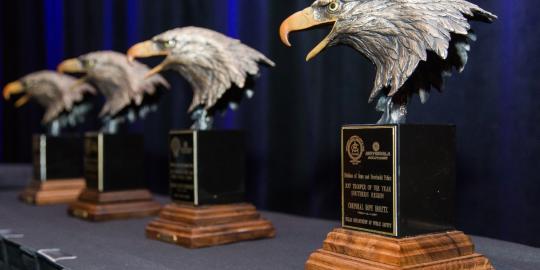
Each year the IACP and Motorola Solutions recognize state troopers and provincial police who have demonstrated bravery, courage, leadership, and professionalism. At the annual Division Midyear meeting, the IACP and Motorola Solutions honor four regional finalists and announce the IACP/Motorola Solutions Trooper of the Year. 
 
Motorola Solutions is proud to partner with the International Association of Chiefs of Police to honor the selfless work being done in police agencies every day around the world. Men and women in state and provincial police agencies know the situations they face can change in an instant, yet they continue to put their lives on the line to help keep their communities safe. Motorola Solutions humbly recognizes the brave efforts of our four finalists and the sacrifices made by all law enforcement.
 
There were many submissions detailing the courageous, dedicated acts of troopers in state and provincial agencies that exemplify what it means to serve and protect their communities.  This year’s regional finalists are: 

Knievel HeadshotTrooper Kyle Knievel
South Dakota Highway Patrol
IACP State and Provincial Police Division - Mountain Pacific Region

On August 5, 2025, Cheyenne River Tribal Police officers pursued a suspect, a violent felon with a federal warrant, after responding to a report of shots fired. Cheyenne River officers requested assistance from the South Dakota Highway Patrol, and Trooper Kyle Knievel responded. 

The pursuit crossed multiple jurisdictions and ended when spike strips disabled the suspect's vehicle. After the vehicle veered into a ditch, the suspect exchanged gunfire with officers, fled into the darkness, and forced his way into a nearby home, taking a woman hostage at gunpoint. 

The suspect then forced the woman into her vehicle and fled again. Trooper Knievel observed the vehicle leaving and initiated a pursuit. During the chase, the suspect fired a rifle round through a pursuing trooper’s windshield, narrowly missing him. The hostage was able to call 911 from inside the suspect's vehicle, and confirmed she was being held at gunpoint. 

After officers deployed spike strips a second time, the suspect dragged the woman from the vehicle, using her as a human shield with a gun to her head as she screamed for help. Officers issued commands for the suspect to drop his weapon, but the threat remained imminent. 

Recognizing the hostage was in immediate danger of being killed, Trooper Knievel moved to a position with a clear line of sight and, exposing himself without cover, fired two precise rounds, stopping the suspect. The hostage was rescued unharmed.


Trooper John Winebrenner 
Virginia State Police 
IACP State and Provincial Police Division - North Atlantic Region

On December 29, 2025, Trooper John Winebrenner received a BOLO from Virginia State Police (VSP) Dispatch for a vehicle that had previously fled from local law enforcement. During the earlier pursuit, a local officer crashed and lost sight of the suspect’s vehicle. The suspect, a convicted felon known to local law enforcement, was wanted for multiple firearms violations. 

When Trooper Winebrenner located the suspect’s vehicle, he attempted a traffic stop. The suspect refused to stop, initiating a five‑minute pursuit that ended when Trooper Winebrenner performed a pursuit intervention technique (PIT), forcing the vehicle off the roadway. With his vehicle pinned between a fence and Trooper Winebrenner’s patrol vehicle, the suspect immediately opened fire from the driver’s seat. 

Under heavy gunfire, Trooper Winebrenner exited his patrol vehicle and engaged the suspect with his service pistol. During the exchange, Trooper Winebrenner sustained a gunshot wound to his left arm and shrapnel injuries to his head and face. Despite these injuries, he continued to fight and employed the necessary force to stop the attack. The suspect succumbed to his injuries at the scene. 

After the threat was stopped, Trooper Winebrenner applied a tourniquet to his arm and calmly notified VSP Dispatch, requesting emergency medical services. A few minutes later, local law enforcement officers arrived and transported him to a nearby hospital. 


Ellis HeadshotTrooper Adam Ellis
Kansas Highway Patrol
IACP State and Provincial Police Division - North Central Region

On November 15, 2025, Kansas Highway Patrol (KHP) Trooper Adam Ellis responded to a volatile domestic violence call in rural Osage County involving an armed suspect experiencing a mental health crisis. Upon arrival, he encountered the combative suspect in a doorway with family members nearby. After prolonged de‑escalation efforts, a deputy deployed a Taser to stop the suspect from retreating inside, causing him to fall back into the home. Fearing a woman inside was in danger, Trooper Ellis advanced to secure the suspect. As he opened the screen door, the suspect drew a handgun and shot Trooper Ellis in the face and shoulder. 

Despite severe injuries, Trooper Ellis rolled to cover and returned fire from the ground with his patrol rifle. With help from another trooper, he reached safety and received immediate medical care. The suspect continued firing from inside and later attempted to flank the deputies, endangering other occupants of the residence. In the ensuing gunfire, the suspect was fatally shot. 

All three deputies were also shot during the incident. Trooper Ellis was rushed to a hospital in Topeka, then airlifted to the University of Kansas Medical Center for extensive reconstructive surgery. Remarkably, all four injured officers are expected to recover. 

Trooper Ellis had graduated from the KHP Academy less than six months earlier and completed field training only two weeks before the incident. 


Trooper Paul Thomas
Kentucky State Police
IACP State and Provincial Police Division - Southern Region

On January 28, 2025, Rowan County Dispatch received 911 calls reporting that a woman in Morehead, Kentucky, had been stabbed and was being held at knifepoint by an attacker. Callers reported that the suspect threatened to kill the woman and any responding officers. Kentucky State Police Trooper Paul Thomas responded alongside officers from the Morehead Police department. As they arrived, a woman ran from an SUV and reported that she could hear her friend screaming inside, confirming the suspect’s threats. 

Trooper Thomas and a Morehead officer went to the front door, announced themselves, and heard the victim pleading for help. When the suspect refused commands and the threat became imminent, the officers forced entry through a barricaded door on an ice‑covered porch. 

Inside, officers found the victim trapped in an overturned recliner. The suspect knelt behind her with a knife. Ignoring repeated commands, he continued to restrain her. Trooper Thomas moved to pull the suspect off the victim and saw the knife positioned at the victim’s neck. 

Recognizing the immediate threat to the victim's life, Trooper Thomas fired two rounds, striking the suspect and ending the attack. Officers pulled the victim to safety while Trooper Thomas rendered aid to the suspect. EMS transported both individuals; suspect later died, and the victim was treated and released.


IACP and Motorola Solutions look forward to honoring the finalists on March 12th from 6:00pm-9:00pm at the 2026 Division Midyear in Boston, Massachusetts. To learn more about the 2026 Division Midyear meeting, click here.

Meet the 2025 IACP/AXON Police Officer of the Year Finalists

Blog Post

The International Association of Chiefs of Police (IACP) and Axon Police Officer of the Year Award is designed to recognize and honor police officers who have demonstrated exceptional valor, bravery, and dedication in the line of duty.

This award highlights officers who have gone above and beyond the call of duty, often in life-threatening or high-risk situations, to protect the public, uphold justice, and demonstrate unwavering commitment to their communities.

The IACP/Axon Police Officer of the Year Award seeks to inspire excellence within the policing profession by celebrating acts of heroism, leadership, and exemplary service.
 

2025 POY Finalist, California Highway Patrol

POLICE OFFICER OF THE YEAR FINALIST 
Officer Salvador Acevedo Jr.
California Highway Patrol

A case which was solved in 2024 initially began as a custody battle in 2009. A judge granted custody of a then eight-year-old to her father. Upon hearing the ruling, the mother fled the courthouse with the child. Officer Acevedo had heard about the kidnapping incident through the media and word of mouth. While Officer Acevedo was confident that investigators would find the suspect and her daughter, the case eventually went cold, and various rumors circulated regarding their whereabouts. Officer Acevedo saved identifying information on the suspect and daughter, including pictures, and would periodically research to find updates, often asking people familiar with the case.

Fifteen years after the kidnapping, on January 3, 2024, the suspect was involved in a traffic crash and upon receiving the report, Officer Acevedo recognized the name. After retrieving the pictures that he stored years ago, Officer Acevedo met with the officer who wrote the report and asked if the driver was the same as the person in the picture, which the officer affirmed.

Officer Acevedo then contacted the victim’s father who stated that his daughter was still missing. He also learned that the suspect had an active arrest warrant for the kidnapping that took place in 2009. With direction from Officer Acevedo, the officer who wrote the crash report reached out to the suspect, asking her to come to the station to discuss the accident. Upon her arrival, Officer Acevedo conducted a voluntary interview wherein the suspect confessed to kidnapping her daughter. The daughter, who was then 24 years old, was alive and well. The suspect was later convicted for kidnapping.
 

2025 POY Finalists, Minneapolis

POLICE OFFICER OF THE YEAR FINALISTS 
Officer Jamal Mitchell (Posthumous) 
Officer Nick Kapinos
Officer Luke Kittock
Officer Eric Withanom
Minneapolis Police Department, Minnesota

On May 30, 2024, the Minneapolis Police Department received a call that two males had been found deceased inside an apartment with apparent gunshot wounds to the head. After fleeing from the scene, the suspect began randomly assaulting pedestrians. In an attempt to rob a male of his scooter, another community member intervened by striking the suspect with his car and breaking his leg.

Officer Jamal Mitchell was the first to arrive and saw two people that needed immediate medical assistance. He approached an injured male, who he believed to be a victim, but was in fact the suspect. The suspect then produced a handgun and fired, striking Officer Mitchell several times. As firefighters arrived, the suspect concealed his weapon and attempted to lure them to assist him. When they hesitated in their approach, the suspect opened fire, prompting the firefighters to take cover and notify dispatch.

Officers Luke Kittock and Eric Withanom arrived at the scene and were immediately met with the suspect's gunfire. Officer Kittock deployed his patrol rifle while Officer Withanom used a ballistic shield to protect themselves and the firefighters. Officer Kittock discharged his rifle at the suspect several times and eventually stopped the threat, despite sustaining a facial injury. When Officer Nicholas Kapinos arrived amid the gunfire, he did not hesitate to return fire and provide cover for the officers rendering aid to Officer Mitchell.

Tragically, Officer Mitchell succumbed to his injuries that day, and his family and the Minneapolis Police Department continue to grieve the loss. Because of their bravery and willingness to run toward the gunfire, these four officers protected the community and prevented additional people from losing their lives.


 2025 POY Finalist, Punjab Police

POLICE OFFICER OF THE YEAR FINALIST
Inspector General of Police Waseem Ahmad Khan
Punjab Police, Pakistan

Inspector General of Police (IGP) Waseem Ahmad Khan sprang into action upon learning of a grave terrorist threat against the 2024 Shanghai Cooperation Organization (SCO) Summit, an event of immense diplomatic significance. Intelligence received from Sister Intelligence Agencies (SIA) on October 14, 2024, indicated that a known terrorist organization had planned a large-scale attack in Islamabad to sabotage the summit. The severity of the threat demanded immediate action, and rather than delegating, IGP Khan took it upon himself to dismantle the network behind the plot.

With limited time, he mobilized intelligence, operational, and technical resources, personally leading the effort to identify and locate the perpetrators. Through an exhaustive overnight analysis of raw intelligence, he pieced together vital information, utilizing advanced facial recognition technology from the National Database and Registration Authority to identify a suspected suicide bomber. Simultaneously, he tracked down the bomber’s local handler, using sophisticated WhatsApp tracking of Afghan commanders. The intelligence was rapidly processed, revealing the suspect’s location. Recognizing the urgency of the situation, the IGP personally took charge of the surveillance operation.

On October 15, 2024, IGP Khan and his team maintained watch over the suspect, methodically verifying his movements. Instead of a premature move that could jeopardize the mission, IGP Khan exhibited tactical patience, waiting until the suspect and his handler were together, ensuring their direct association before executing the operation. The suspects emerged from a flat on a motorbike, and IGP Khan and his team discreetly followed. The suspects opened fire on the officers, but IGP Khan and his team fearlessly gave chase amidst the hail of bullets, capturing the suspect’s handler. After a thorough and coordinated search, the IGP was able to locate items belonging to the suspect and additional critical evidence. He personally interrogated the handler, expertly extracting intelligence that led to the unraveling of the entire terrorist network. Inspector General Khan’s actions directly ensured the safety of Pakistan’s citizens.


2025 POY Finalist, Winston-Salem

POLICE OFFICER OF THE YEAR FINALIST
Officer Luke Alderman
Winston-Salem Police Department, North Carolina

On November 17, 2024, Officer Luke Alderman responded to a reported home invasion. The caller indicated that a male subject, later identified to be her ex-boyfriend, was attempting to break into her home. The caller stated that the suspect was armed with a gun and was pulling air conditioning units out of the windows in his attempts to enter the residence. As Officer Alderman arrived on the scene and exited his patrol vehicle, two gunshots were discharged inside the residence.

Immediately following the gunshots, several small children and a female ran outside. The woman was screaming and yelling that the suspect was in her room and that her baby was still inside. Officer Alderman drew his weapon and approached the residence as more gunshots could be heard from inside. A small child could be seen in the front window where the suspect had tried to enter the residence. With no regard for his own safety, Officer Alderman approached, pulled the child out of the window, and returned her to the mother’s waiting arms.

As more gunshots rang out, Officer Alderman took cover behind a small tree at the rear of the house to further assess the situation. Only seconds later, the suspect exited the side door of the residence, armed with a handgun. Officer Alderman discharged his pistol, striking the suspect and stopping the threat of violence. The suspect would later succumb to his injuries.

Two small children were located unharmed inside the residence, as well as a deceased male. Due to the heroic actions of Officer Alderman, a mother and her six small children were uninjured and safely evacuated from the home. While the loss of even one life is tragic, Officer Alderman’s actions, in the presence of an extremely chaotic, violent, and challenging scene, prevented more lives from being lost during this horrific domestic violence incident.
 

The IACP and Axon look forward to honoring the finalists at the 2025 IACP Annual Conference and Exposition. To learn more about IACP 2025, visit the conference website

Blog Post
SHARE

Please sign in to read and get access to more member only content.

IACP - Loader Animation IACP - Loader Animation IACP - Loader Animation
Ask Cris
x Ask Cris

Hi, I'm CRIS!

I'm IACP's AI Knowledge Assistant--here to help you find what you need, fast. I'm trained solely on IACP content and can chat in multiple languages. Ask me anything, and I'll guide you through the wealth of information available.

You are currently using a limited version of CRIS. Unlock its full potential by logging into your member account. Not a member yet? Check out our Membership Page for more information!